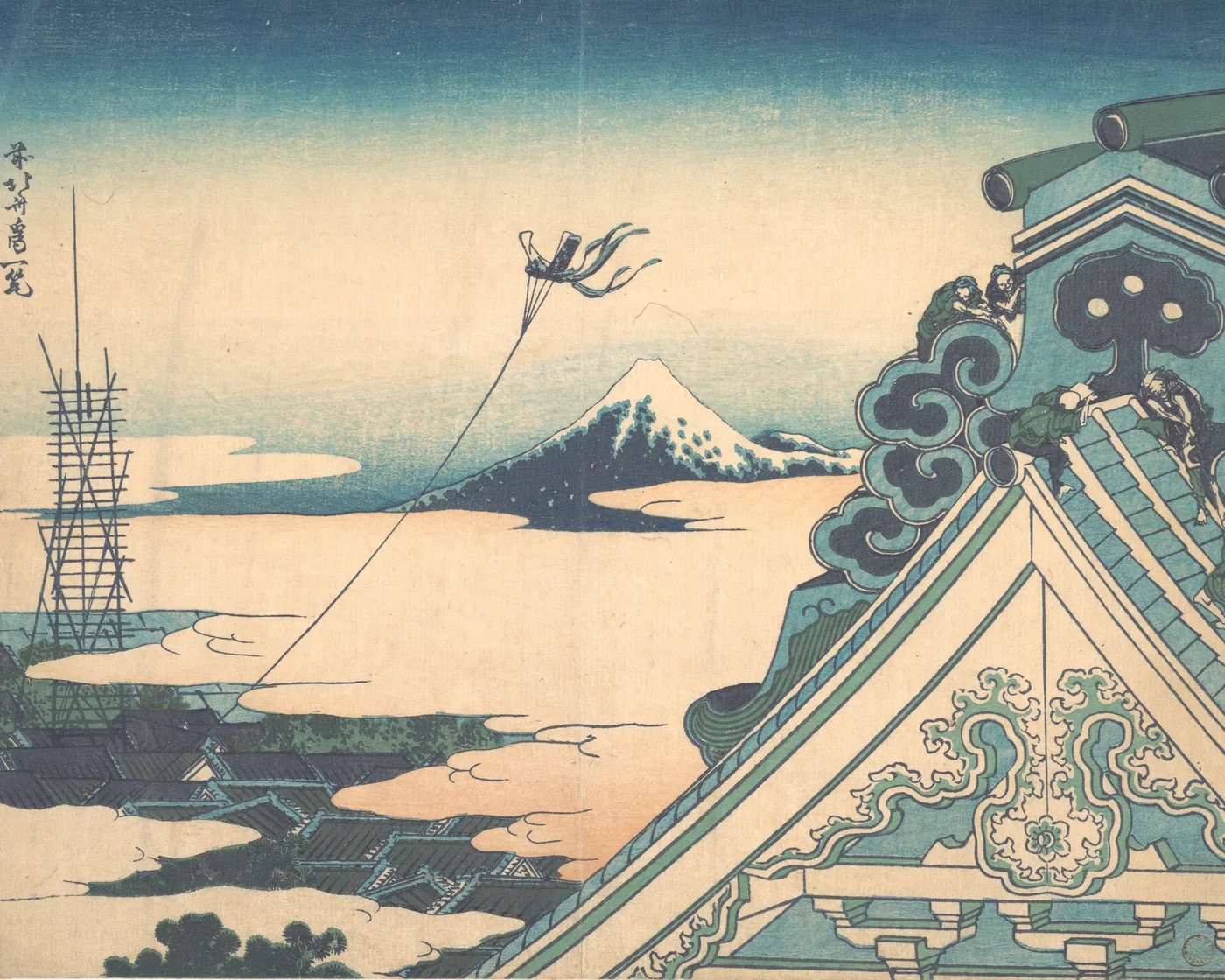
Asakusa Fuji Sengen Shrine: Mount Fuji behind Senso-ji
A small Mount Fuji shrine about 9 minutes' walk north of Senso-ji. Most days it is a quick, free stop; it comes alive for the plant fair (*ueki-ichi*) on the last weekends of May and June, when about 60 stalls line the streets, and for its festival on July 1. Allow 10 minutes.
Quick facts
- From Asakusa Stn
- 10 min (Ginza Line, Tobu); Toei Asakusa Line 13 min
- Step-free
- Ginza Line Exit 1 has a street elevator
- Time needed
- 10 min (longer on fair days)
- Address
- 5-3-2 Asakusa, opposite Asakusa Police Station
What is Asakusa Fuji Sengen Shrine?
A shrine to Mount Fuji, known locally as O-Fuji-san (浅草富士浅間神社). In the Edo period, climbing Fuji was a lifelong dream for ordinary townspeople, and pilgrim groups called Fuji-ko set up Fuji shrines across the region. On the mountain’s opening day, people who could not make the trip worshipped at their local Sengen shrine instead (Asakusa Shrine).
The founding date is unknown. A ridge tag found in the hall points to the Genroku era (1688–1703), but a city map of 1671 already shows the shrine (Taito City; Asakusa Shrine). In the Edo period it was run by a sub-temple of Senso-ji and was one of Edo’s main centers of Fuji worship. Since 1873 it has been looked after by Asakusa Shrine, next to Senso-ji’s main hall.
What is there to see?
- The mound. The grounds stand about 2 m above the street. Taito City notes an old custom in the Kanto region of placing Sengen shrines on man-made mounds or natural rises.
- The Fuji-zuka. A small model of Mount Fuji, built in the grounds by parishioners in June 2016 (Asakusa Shrine).
- The hall. From outside it looks new: the worship hall was rebuilt in 1998. Inside the plastered main hall is an 1878 storehouse-style hall, the only part to survive the 1945 air raids. A plaster dragon is carved on the inside of its doors (Asakusa Shrine).
Taito City lists the hall, the grounds and a large set of Edo-period statues, ritual tools and documents found during the 1997–98 repairs as a tangible folk cultural property (1999).
When is the best time to go?
During the plant fair (ueki-ichi). It is held on the last Saturday and Sunday of May and of June, four days in all, with about 60 plant stalls along Yanagi-dori and the streets around. The old saying is that trees bought at O-Fuji-san’s fair take root well, because the rainy season is the best time to plant. Asakusa Police counted about 300,000 visitors over the four days in 2008 (Asakusa Shrine).
The shrine’s main festival is on July 1, the modern opening day of Mount Fuji’s climbing season (Asakusa Shrine).
At the fair and from January 1 to 3 the shrine gives out mugiwara-hebi, straw snakes said to protect against illness and water disasters. They were sold here until the early Showa era, disappeared after the war and have been revived as a charm (Asakusa Shrine).
On ordinary days, the shrine is a short stop. Combine it with the Oku-Asakusa walk, where it is the first stop after Senso-ji.
Getting there
The shrine is at 5-3-2 Asakusa, diagonally opposite Asakusa Police Station. Asakusa Shrine gives these walking times: Ginza Line and Tobu Asakusa Station 10 minutes, Toei Asakusa Line 13 minutes, Tsukuba Express Asakusa 15 minutes. Ginza Line Exit 1 has a street elevator (Tokyo Metro).
Nearby
Walk back south to Senso-ji and Kaminarimon. Heading north, Otori Shrine and the Yoshiwara sites are next on the walk. East toward the river are the Saruwaka-machi theater sites. More: Asakusa travel guide.
Header illustration: Katsushika Hokusai, “Honganji at Asakusa in Edo”, from Thirty-six Views of Mount Fuji, ca. 1830–32. The Metropolitan Museum of Art, public domain.