Asakusa Shrine: Sanja Matsuri 2027, goshuin and what to see
Asakusa Shrine stands just right of Senso-ji's main hall; outside May, 15 minutes is enough. No admission fee is listed; goshuin cost ¥500 at the office, 9 a.m.–4 p.m. (4:30 p.m. weekends). Its hall dates from 1649. Best visited during the Sanja Matsuri, set for May 14–16, 2027.
Quick facts
- Shrine office
- 9:00–16:00 (Sat, Sun, holidays until 16:30)
- Admission
- No fee listed; goshuin ¥500
- From Asakusa Stn
- 7 min walk (Ginza, Asakusa and Tobu lines)
- Step-free
- Ginza Line, one route by elevator via Exit 1
- Time needed
- About 15 min (est.)
- Address
- 2-3-1 Asakusa, Taito City
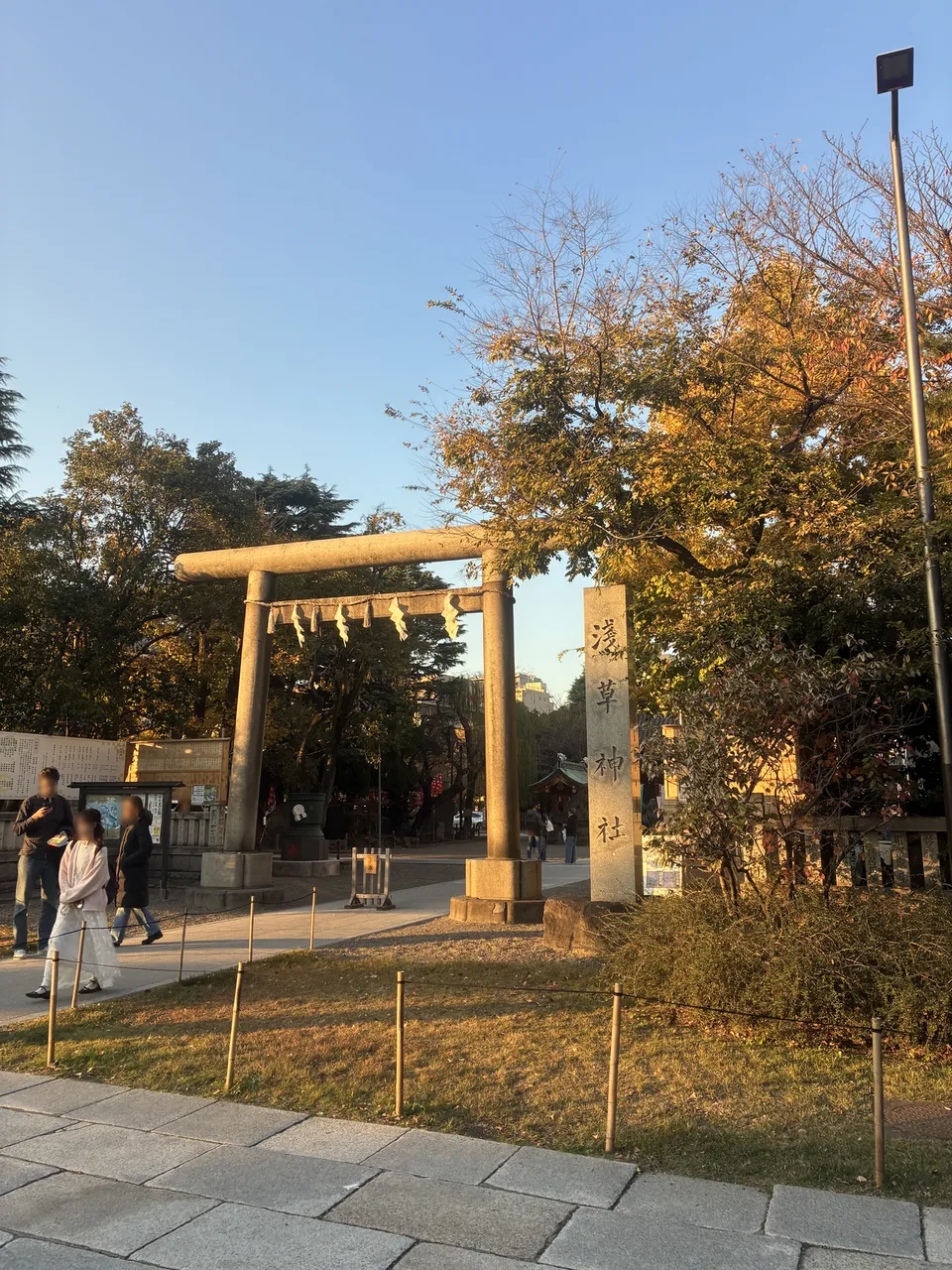
“I went to Asakusa Shrine [on November 27, 2026]. It made me feel calm and bright. It was a good space. Of course there were lots of tourists, but it's a spacious place, so it was very comfortable. Sadly, there was no monkey show [that day]...”
What is Asakusa Shrine?
Asakusa Shrine (浅草神社) sits just to the right of Senso-ji’s main hall, and it honors the three men behind the temple. By the shrine’s account, in 628 the fisherman brothers Hinokuma Hamanari and Takenari pulled a small Kannon statue from the river in their net. A local man, Haji no Nakatomo, recognized it as Kannon and later turned his home into a temple: the start of Senso-ji.
According to the shrine, Haji’s descendants later received an oracle from Kannon in a dream, telling them to enshrine the three as gods beside the Kannon hall. That is why locals still call the shrine Sanja-sama, “the three shrines”, and why its festival is the Sanja Matsuri. The shrine says the exact founding year is unknown and puts it no earlier than the late Heian to early Kamakura period. It took the name Asakusa Shrine in 1873.
What is there to see?
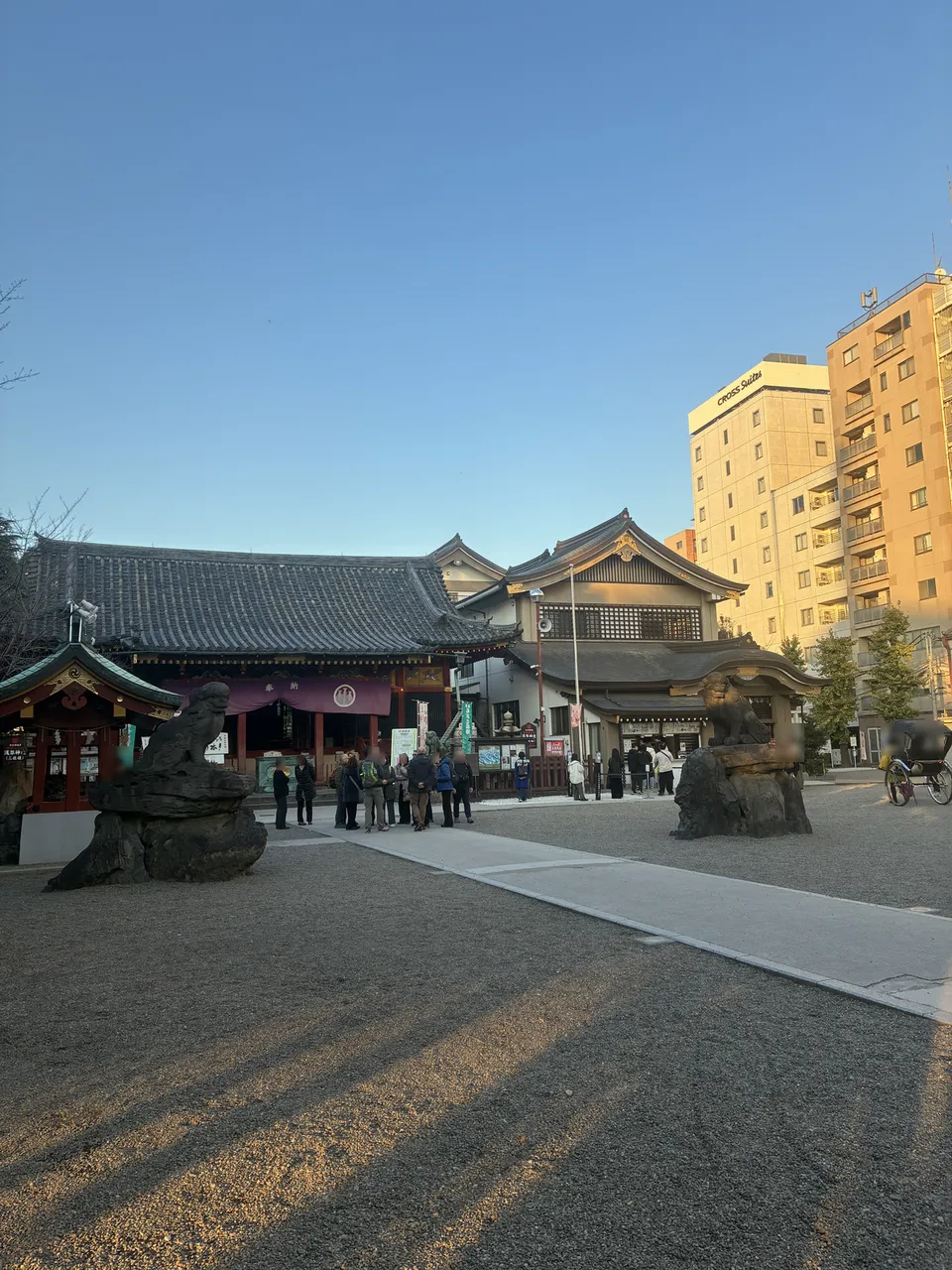
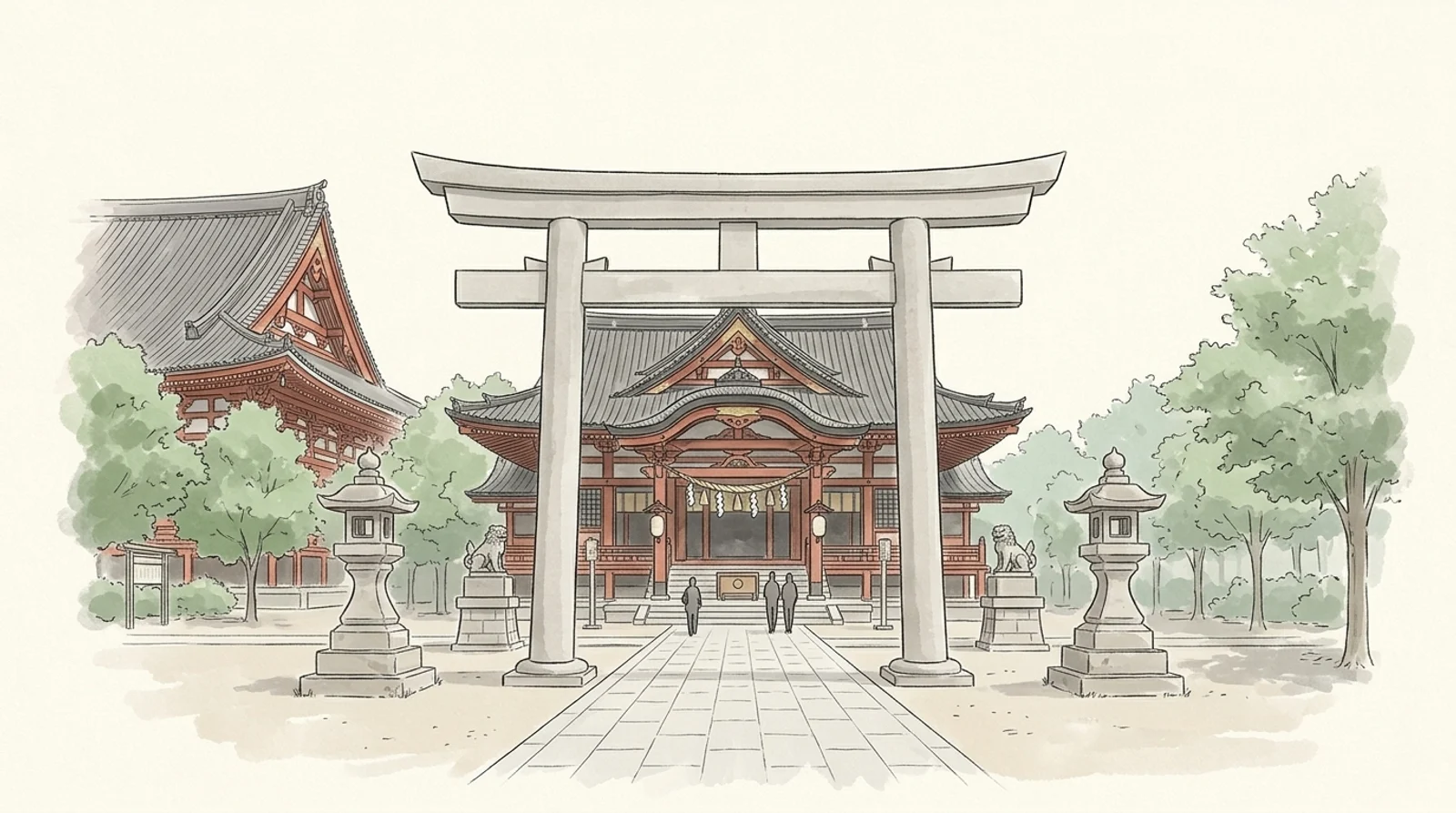
- The main hall. Shogun Tokugawa Iemitsu donated the buildings in 1649. They are built in the gongen-zukuri style, like Nikko Toshogu, with worship hall, offering hall and main hall joined in one. They survived fires, the 1923 earthquake and the war, and were named an Important Cultural Property in 1951.
- The “married couple” komainu. The guardian dogs date from the early Edo period. The shrine calls their pose rare and says couples pray to them for a good match.
- Hikan Inari Shrine. This small subsidiary shrine was founded in 1855 after the wife of the fire brigade chief Shinmon Tatsugoro recovered from illness. The origin of its name is unknown; the shrine says it suggests finding work and getting promoted. The building survived both the 1923 earthquake and the wartime air raids.
- Monuments. The shrine lists a fan-shaped stone, the Ogi-zuka, where old folding fans are burned every April 8, and a stone for the manga Kochikame.
- The mikoshi storehouse. The three main portable shrines are kept here. The doors open during the festival, at New Year and on some spring weekends and holidays.
How do you get a goshuin?
The shrine publishes office hours only, not hours for the grounds. Go to the shrine office, open 9 a.m.–4 p.m. on weekdays and 9 a.m.–4:30 p.m. on weekends and holidays. Three regular goshuin are on offer, ¥500 each: Asakusa Shrine, Ebisu (one of the Asakusa Seven Lucky Gods) and Hikan Inari.
They are written straight into your own goshuin book. If you don’t have one, the shrine offers its own books, ¥1,000 (Edo-komon pattern, pink, navy or green) or ¥1,500 (Reiwa special edition, purple or black), but only with a goshuin written in: it doesn’t hand out blank books. It doesn’t mail books or goshuin either. Pray at the shrine first, take off any book cover and hand over the book open at the right page. On busy days the office may change its hours or how it handles requests.
When is Sanja Matsuri 2027?
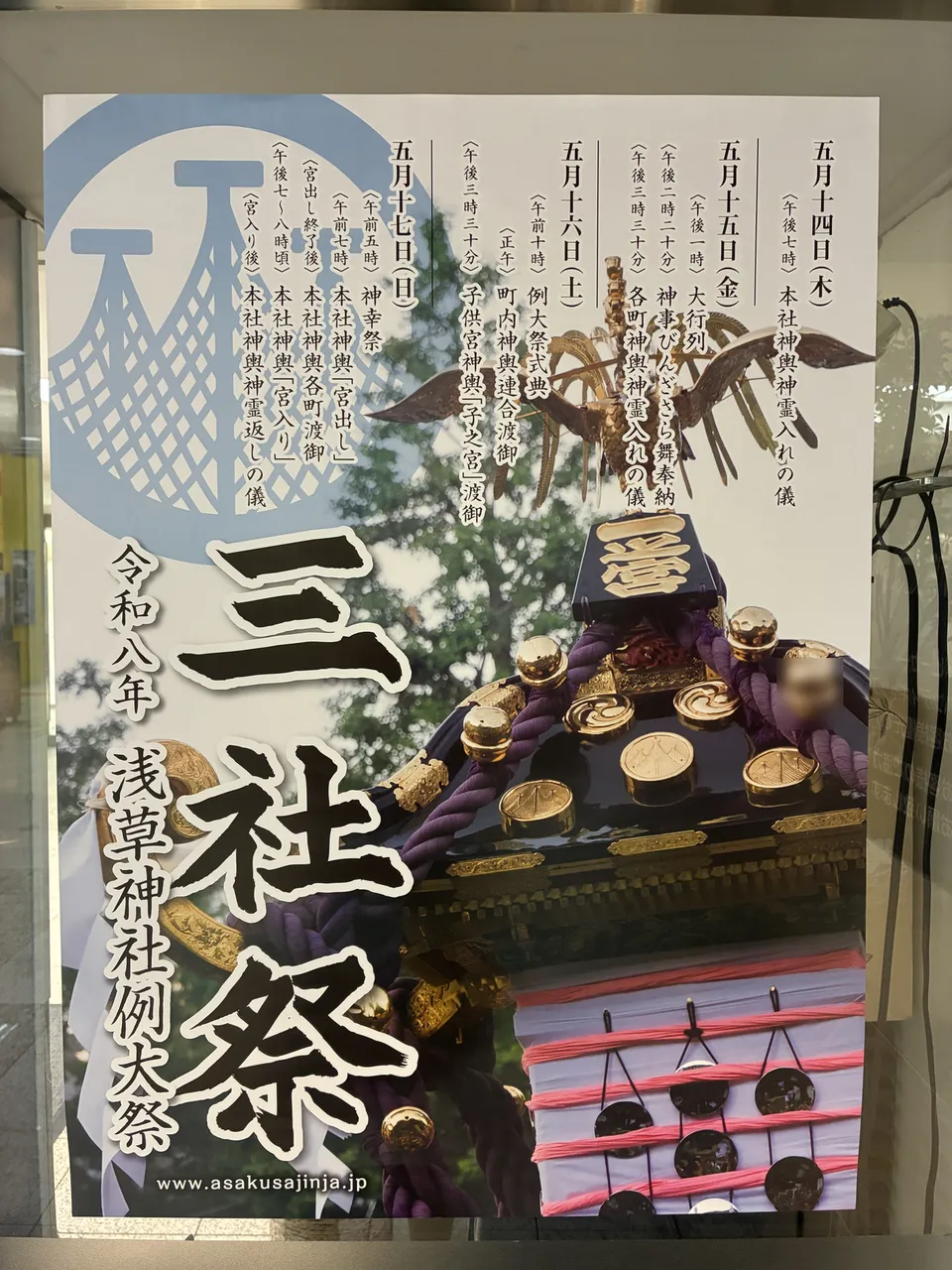
The shrine has announced Friday May 14 to Sunday May 16, 2027, adding that the schedule may change. The shrine describes it as a Friday-to-Sunday festival built around the third Saturday of May. The shrine counts about 1.8 million visitors.
- Friday: the Daigyoretsu parade through Asakusa at 1 p.m., then the Binzasara-mai dance in the shrine hall at 2:20 p.m. and in the kagura hall at 3 p.m. The parade and the 3 p.m. kagura-hall dance are canceled in rain.
- Saturday: from noon, about 100 neighborhood mikoshi from the shrine’s 44 districts gather in the square behind Senso-ji’s main hall. They leave one at a time, are purified at Asakusa Shrine, then are carried back to their own districts. The children’s mikoshi follow at 3:30 p.m.
- Sunday: the three main mikoshi, Ichinomiya, Ninomiya and Sannomiya, leave the shrine at 7 a.m. They tour the districts all day and return at about 7–8 p.m. The 2027 route isn’t published yet. The schedule page still shows the 2026 split: Ichinomiya toured the western districts, Ninomiya the southern and Sannomiya the eastern; expect the details to change.
- Sunday road closures: Kaminarimon-dori is closed to traffic from 10 a.m. to 7 p.m. and Umamichi-dori from 10 a.m. to 5 p.m.
Times above are from the shrine’s schedule page, checked November 25, 2026. Watching the processions is free; there is nothing to book.
Verdict: for the processions, come on the Friday afternoon (parade at 1 p.m.) or the Saturday (mikoshi from noon). Outside May, 15 minutes is enough for the hall, the komainu and Hikan Inari.
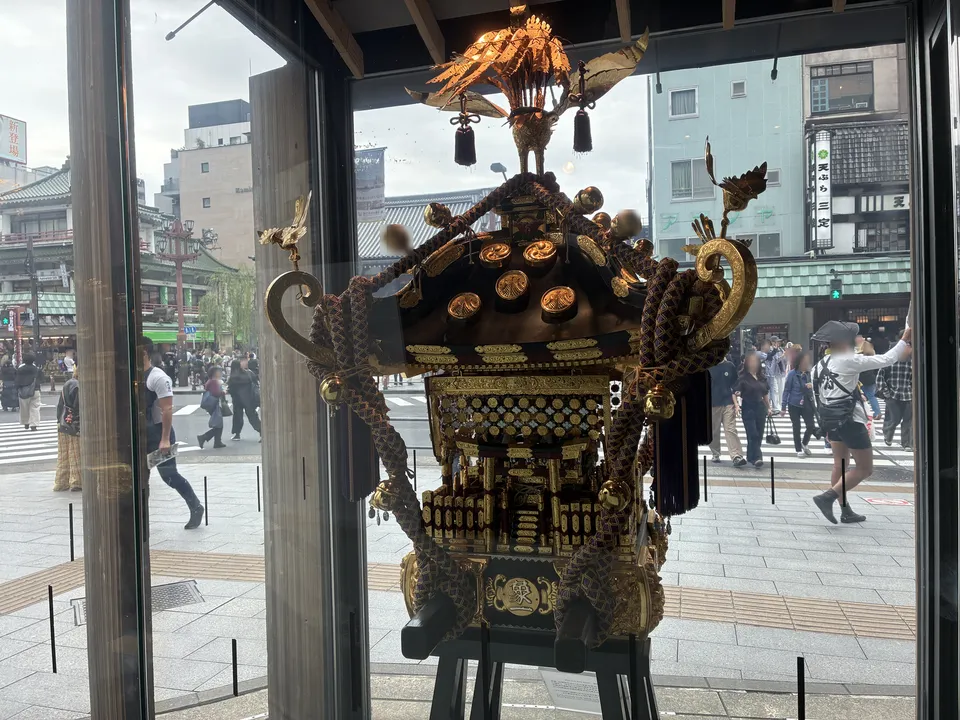
If you are not here in May, you can see a gold mikoshi on display at the Asakusa Culture Tourist Information Center, opposite Kaminarimon.
Getting there
The shrine gives 7 minutes on foot from the Ginza, Toei Asakusa and Tobu lines’ Asakusa Station. It is 10 minutes from the separate Tsukuba Express station. With a suitcase, use the Ginza Line, which is step-free by one route (Tokyo Metro’s Japanese barrier-free page): the Exit 1 street elevator, then an elevator outside the gates between the Senso-ji/Kaminarimon gate and the Azumabashi-side gate, and inside the Azumabashi-side gate an elevator down to Platform 1. Visitors’ cars can’t use the shrine car park, which is for prayer ceremonies and weddings only.
Nearby
Senso-ji is a few steps away, and its old east gate, Nitenmon, stands just south of the shrine. A short walk east of the gate is Hanakawado Park, a neighborhood playground with the Ubagaike pond site and its grim Edo legend. The shrine also looks after Asakusa Fuji Sengen Shrine, about 9 minutes’ walk north of Senso-ji. To fit it all into one walk, follow the 2-hour Asakusa route.