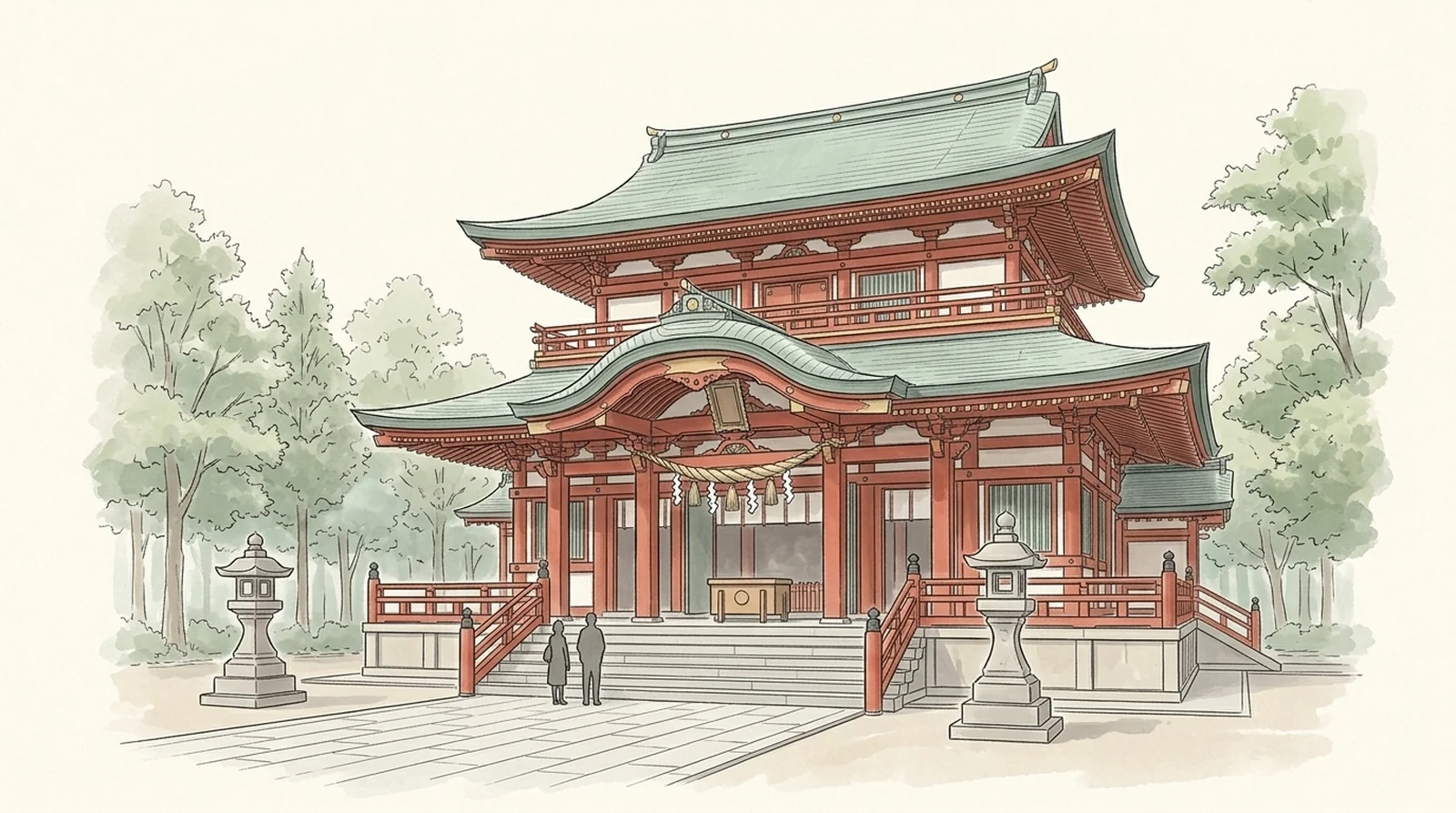
Tomioka Hachimangu: Renovation Until 2027, Gold Mikoshi
Tomioka Hachimangu's main hall is under scaffolding from March 2026 to about June 2027 for 400th-anniversary repairs, but the shrine stays open and prayers have moved to a temporary hall. Worth a short stop for the gold mikoshi, the Ino Tadataka statue and the sumo monuments; the main hall itself is hidden until mid-2027.
Quick facts
- Hours
- Office 9 a.m.–5 p.m.; prayer reception 9 a.m.–4:20 p.m.
- Rain
- Mostly outdoors; the mikoshi are viewed behind glass
- From Monzen-nakacho Stn
- 3 min from Exit 1; about 6 min from Exit 5
- Step-free
- Elevator to Exit 2 from the Tozai Line's Tomioka-hachimangu gate; stone steps up to the hall
- Address
- 1-20-3 Tomioka, Koto-ku
“I went to Tomioka Hachimangu on November 10. Sadly, it was under renovation.”
Is Tomioka Hachimangu closed for renovation?
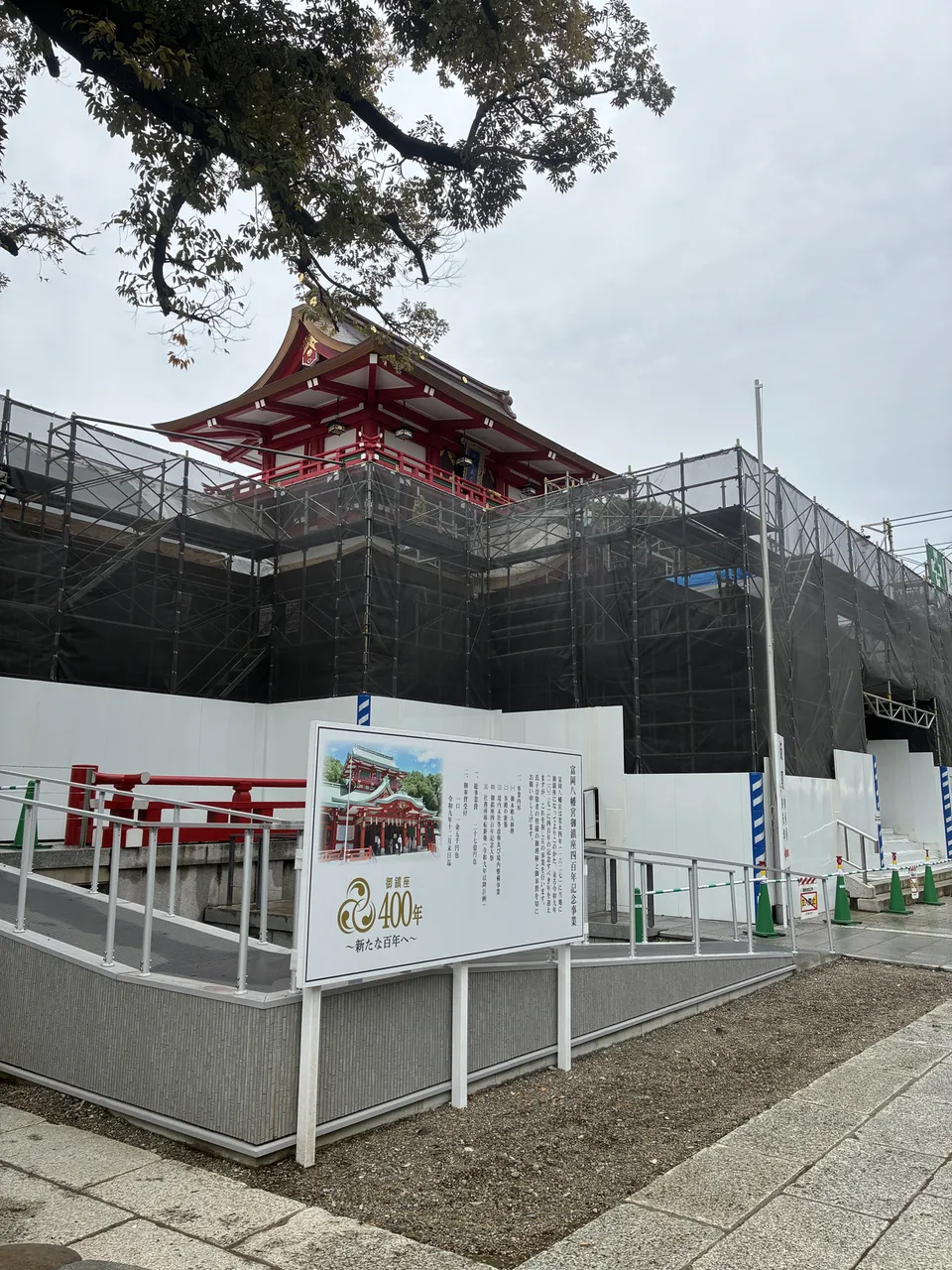
No, but the building you came to see is hidden. The main hall is under repair from March 2026 to June 2027 (planned) and stays behind hoarding throughout (shrine notice): earthquake reinforcement, a new roof and new finishes for the 1956 hall.
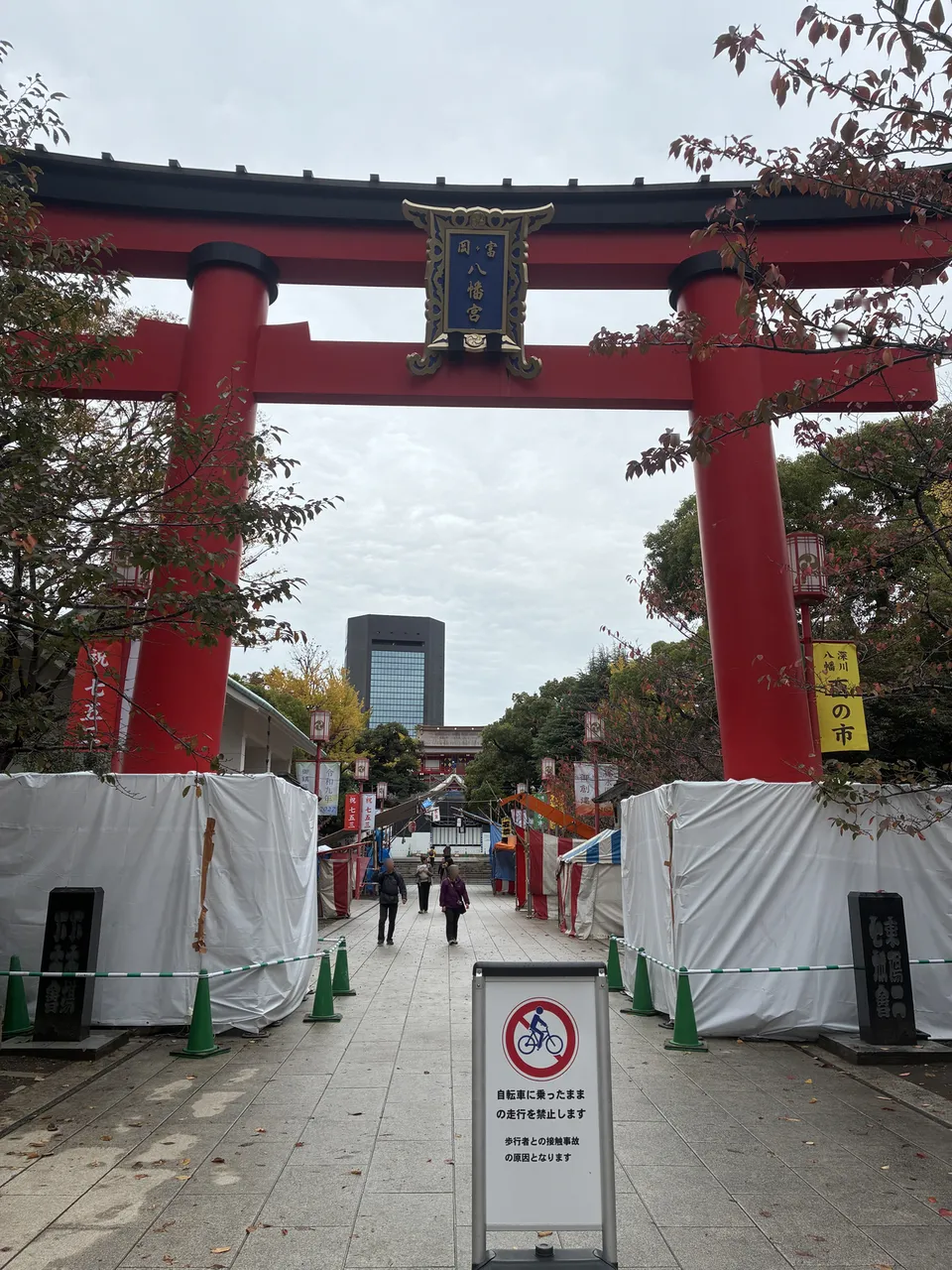
I went on November 10, 2026, and sadly it was under renovation, as the photos here show.
The shrine was founded in 1627, so 2027 is its 400th year. An anniversary festival in August 2027 will include a procession of its biggest gold mikoshi, the Ichi-no-miya (shrine website).
Where do prayers and goshuin happen now?
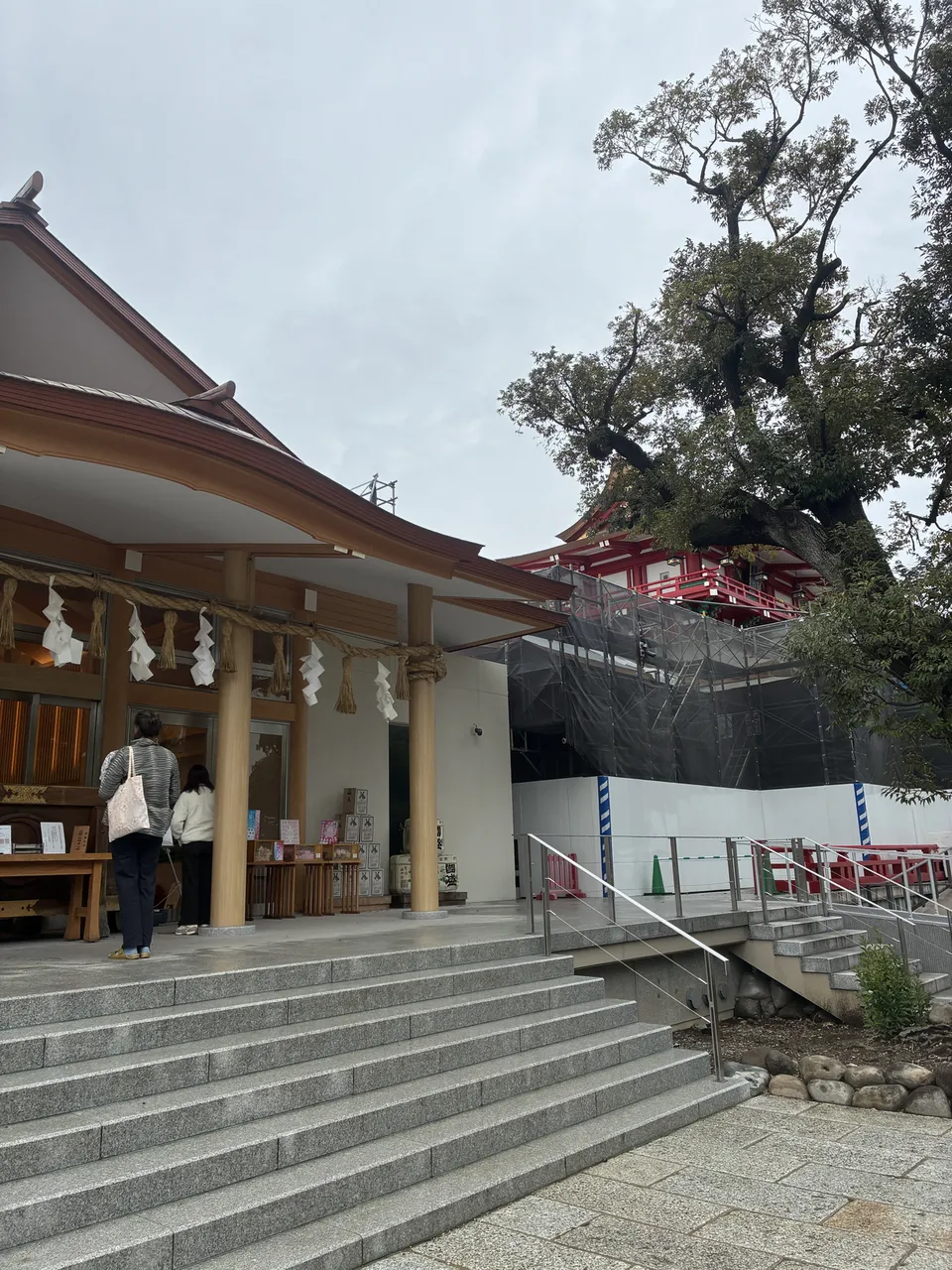
In the guest hall, which serves as the temporary main hall from May 28, 2026 to June 2027 (planned). The shrine says the prayers and fees are the same as before. Ceremonies start on the hour and half hour from 9:30 a.m. to 4:30 p.m.; reception runs 9 a.m.–4:20 p.m. (shrine notice). A sign at the foot of the steps points left for the temporary hall, prayers and goshuin (stamps).
You can also write a wish on a copper plate for the new roof, from ¥3,000, at the shrine office until about early 2027 (shrine website).
What is the gold mikoshi?
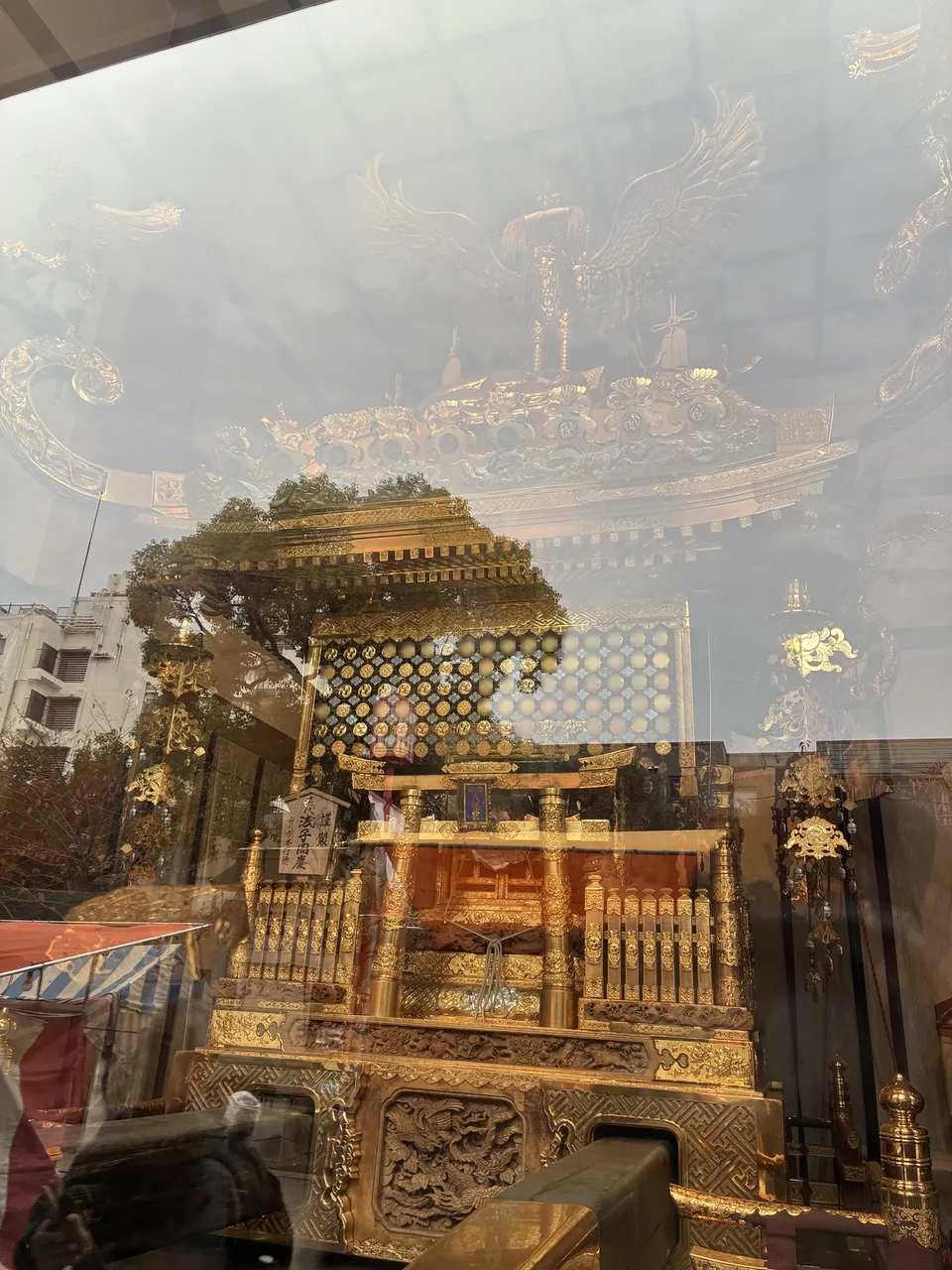
The shrine calls it “Japan’s largest golden mikoshi”. Its three Edo-period gold mikoshi were lost in the 1923 earthquake. The Ichi-no-miya, dedicated in 1991, is 4.39 m high and about 4.5 tonnes, with 24 kg of pure gold on the roof. Because it is too big to carry every year, the shrine had the Ni-no-miya made, first carried in 1997 (shrine website). You see them through glass, so expect reflections.
Why is there a statue of Ino Tadataka?
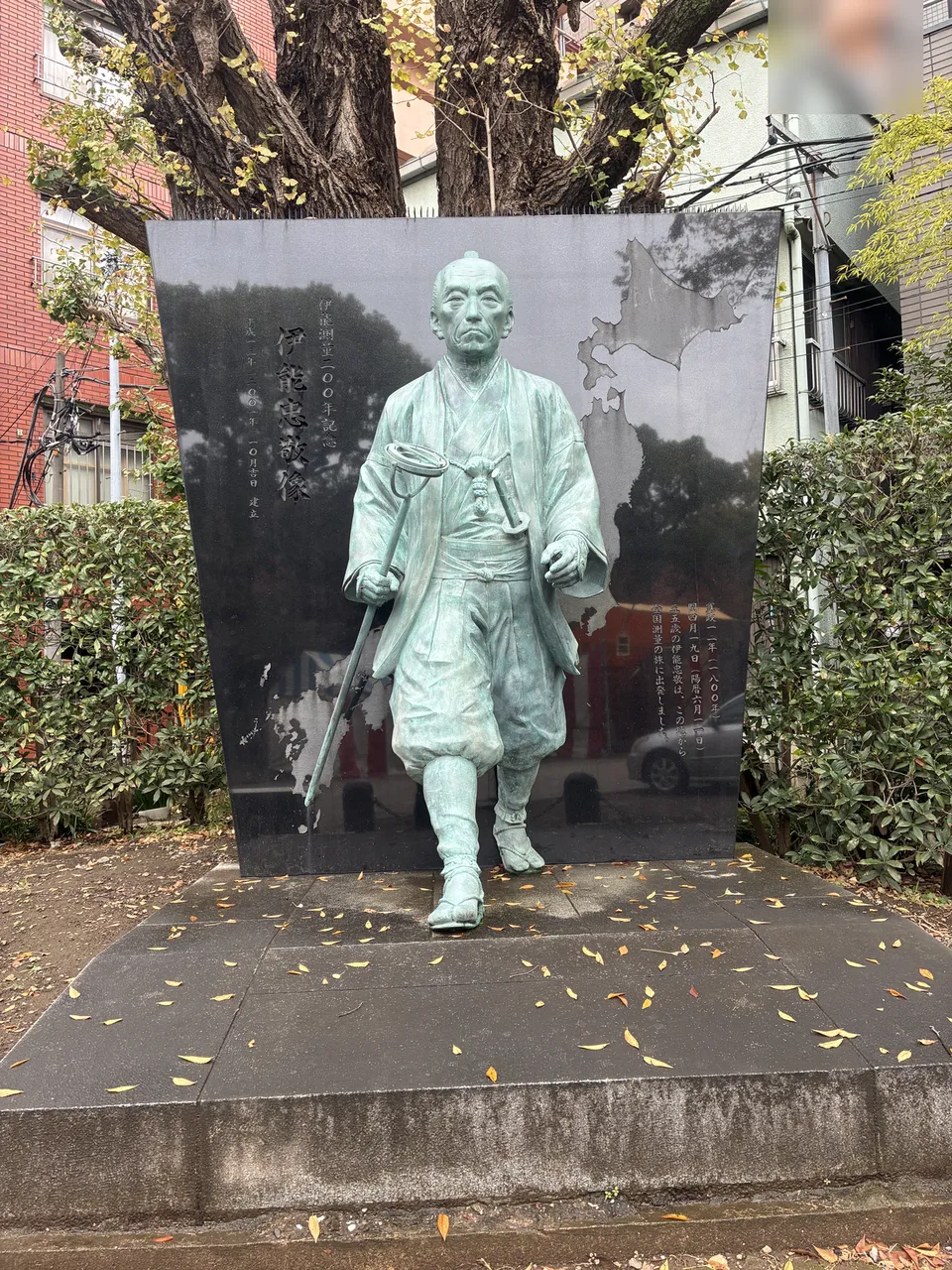
Ino Tadataka, the father of modern Japanese maps, lived in Fukagawa Kuroe-cho (today Monzen-nakacho 1-chome). He prayed here before setting out for Hokkaido on June 11, 1800. He planned 10 survey trips in all and came to pray before each of the first eight, the long-distance ones (shrine website). The statue beside the great torii was unveiled on October 20, 2001, marking 200 years since his surveys began.
What does Tomioka Hachimangu have to do with sumo?
The shrine calls itself the birthplace of Edo kanjin-zumo tournaments. In 1684 the shogunate allowed spring and autumn tournaments on these grounds, and the main tournaments were held here for about 100 years before moving to Eko-in in Honjo. The Yokozuna Monument (1900, 3.5 m high) carries the yokozuna’s names; each new one has his name carved here (shrine website).
When is the Fukagawa Hachiman Festival?
Every August, centered on August 15. It is one of Edo’s “three great festivals”, nicknamed the mizukake matsuri: people along the route throw water over the mikoshi carriers. Every three years comes the main festival, with 53 neighborhood mikoshi in a joint procession (shrine website). The last ran August 12–16, 2026 (san-tatsu); the 400th-anniversary festival follows in August 2027 (shrine website).
Tori-no-ichi, fairs and flea markets
- Fukagawa Tori-no-ichi: next fair November 19, 2026 (the first was November 7). The shrine’s rake charms are on sale daily until mid-December; stall rakes only on fair days (shrine poster). The best-known fair is at Otori Shrine near Asakusa; see Tori-no-ichi 2026.
- Monthly festival: the 1st, 15th and 28th, 9 a.m., open to anyone; stalls set up around Monzen-nakacho Station.
- Antique market: 1st, 2nd, 4th and 5th Sundays, sunrise to sunset. If one falls on the 28th, there is a flea market instead.
- Flea market: the 15th and 28th, early morning to sunset.
(shrine website)
Getting there
- Monzen-nakacho Station (Tokyo Metro Tozai Line, Toei Oedo Line): 3 minutes from Exit 1, about 6 minutes from Exit 5 (shrine).
- Step-free: Tokyo Metro lists an elevator from its Tomioka-hachimangu ticket gate up to Exit 2, and one from the Nishi-funabashi-bound platform to that gate.
- From Asakusa: Ginza Line to Nihombashi, then the Tozai Line toward Nishi-funabashi, two stops to Monzen-nakacho (Tokyo Metro).
- Inside the grounds: stone steps lead up to the main hall and the temporary hall.
Nearby
Fukagawa Fudo-do, about 120 m west, pairs well with the shrine, and its goma fire ritual, with big taiko drums, is worth seeing. For more of east Tokyo, start with the Asakusa travel guide.
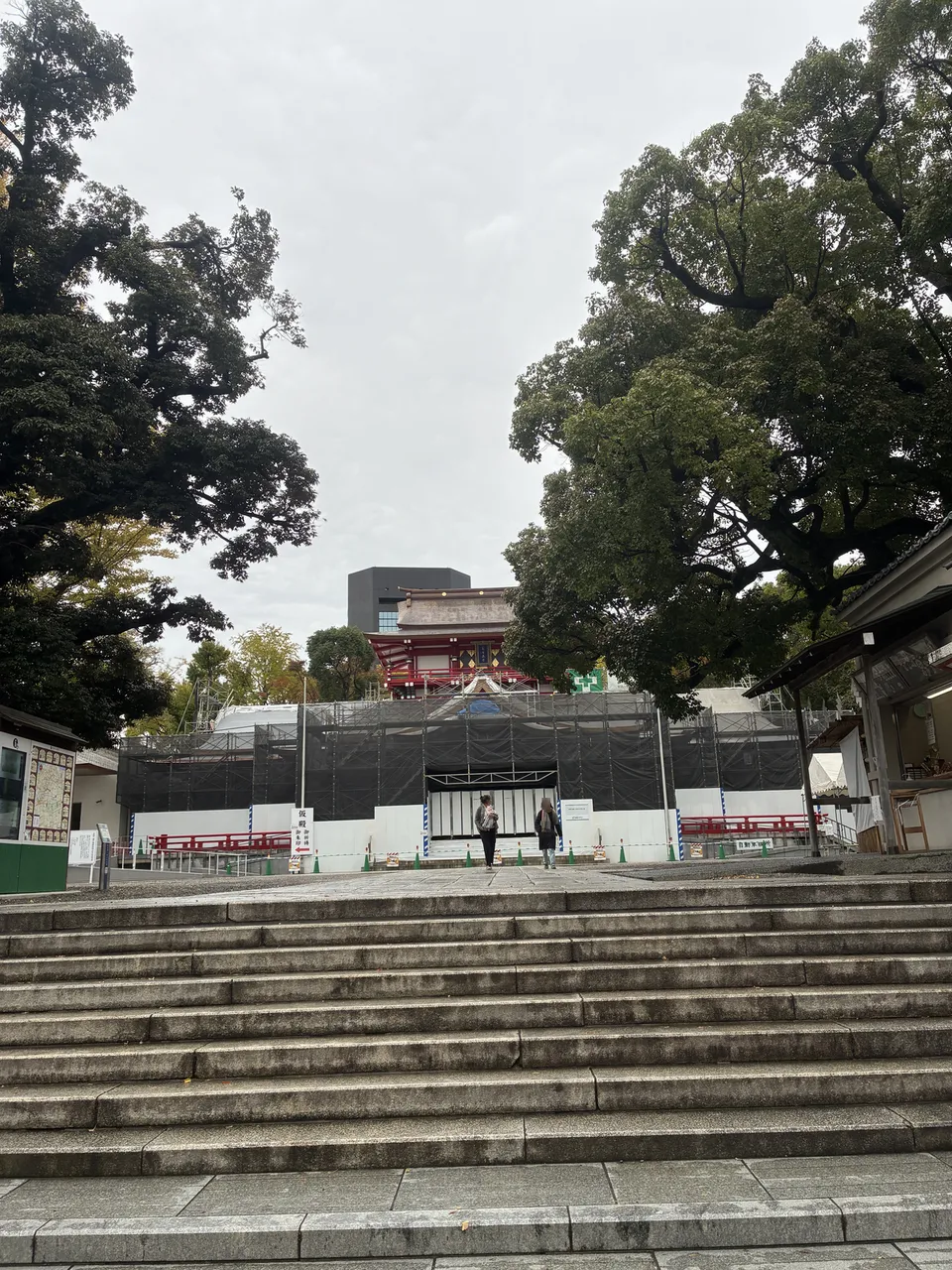
- Sign to temporary hall, prayers, goshuin
Sources
- www.tomiokahachimangu.or.jp
- www.tomiokahachimangu.or.jp
- www.tomiokahachimangu.or.jp
- www.tomiokahachimangu.or.jp
- www.tomiokahachimangu.or.jp
- www.tomiokahachimangu.or.jp
- www.tomiokahachimangu.or.jp
- www.tomiokahachimangu.or.jp
- www.tomiokahachimangu.or.jp
- www.tomiokahachimangu.or.jp
- www.google.com
- www.city.koto.lg.jp
- san-tatsu.jp
- www.tokyometro.jp
- www.tokyometro.jp
- www.tokyometro.jp