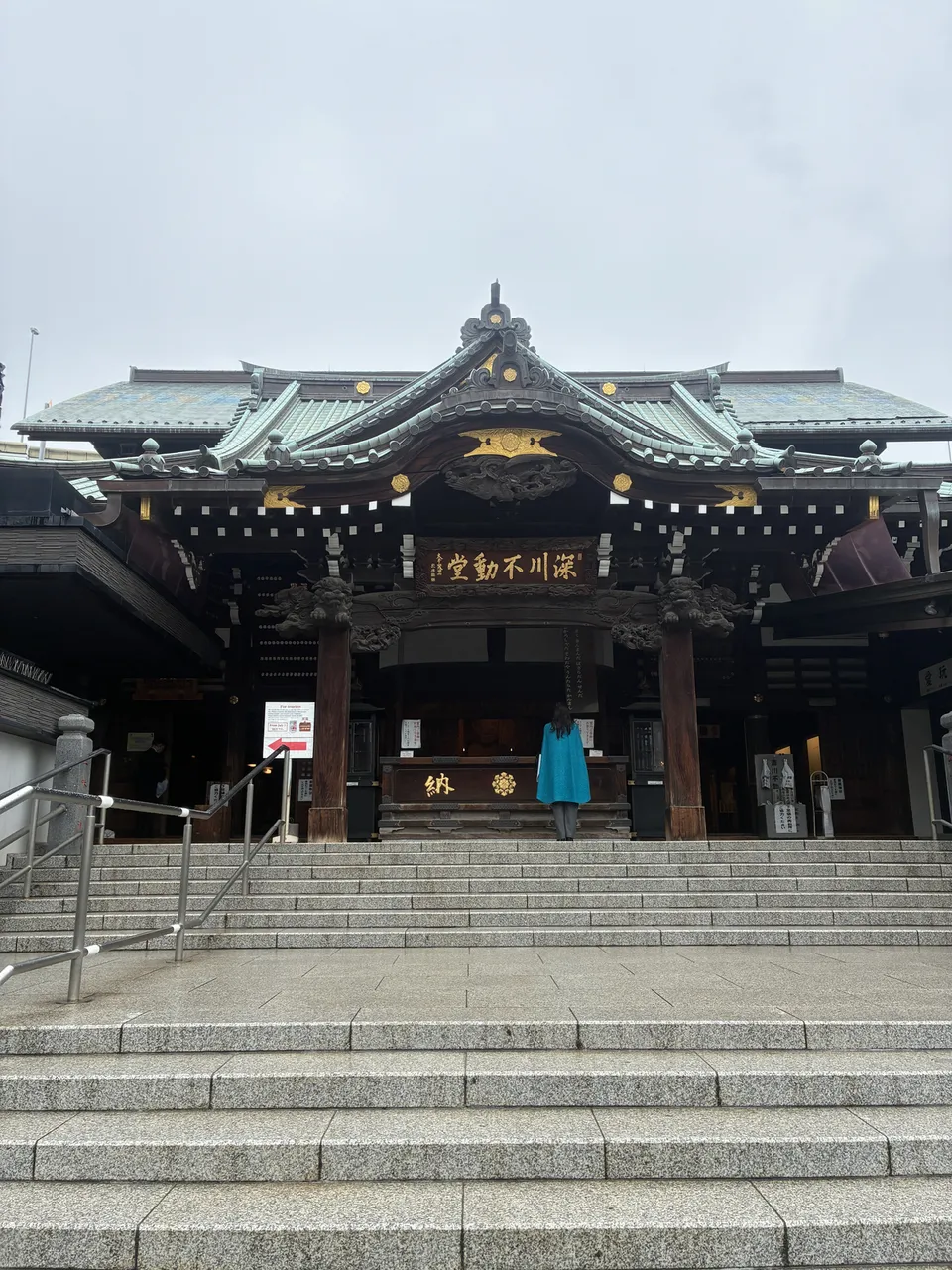
Fukagawa Fudo-do goma fire ritual: times, fee, access
Go for one of the five daily goma fire rituals (9 a.m., 11 a.m., 1, 3 and 5 p.m.) at this Tokyo branch of Naritasan Shinshoji. A sign at the hall asks foreign tourists to pay a ¥1,000 prayer fee at the counter, so have ¥1,000 ready. It is 2 minutes from Monzen-nakacho Station.
Quick facts
- Goma fire ritual
- Daily 9:00, 11:00, 13:00, 15:00, 17:00 (temple FAQ)
- Hours
- Open every day; worship 8:00–17:45 (temple FAQ). Inner Hall 1F/2F 9:00–17:45, 4F 9:00–17:00
- Entry
- Grounds free. Hall sign asks foreign tourists for a ¥1,000 prayer fee (from July 1, 2025)
- Station
- Monzen-nakacho, Tozai Line Exit 1 (2 min) or Oedo Line Exit 6 (5 min)
- Step-free
- Exit 1 not listed with an elevator; Tokyo Metro lists one at Tozai Line Exit 2
- Strollers
- The temple asks visitors not to bring strollers
- Wheelchairs & babies
- Wheelchair visits OK; baby room on request at the general reception
- Toilets
- Yes (marked on the precinct map board)
- Photos
- A notice in the hall says no photography (seen November 10, 2026)
“The hall is quite large, but the big fire made it warm, in contrast to the cold outside, and the monks' loud sutra chanting echoed all through the hall.”
What is the goma fire ritual?
Goma is an esoteric Buddhist fire ritual: monks chant before Fudo Myoo, the fierce guardian deity, and burn wooden prayer sticks (goma-gi) on the altar fire. Fukagawa Fudo-do is the Tokyo branch of Naritasan Shinshoji, the big temple in Narita, and it holds goma five times a day, at 9 a.m., 11 a.m., 1 p.m., 3 p.m. and 5 p.m., fair days included (temple website). Koto City’s tourism site calls the daily goma “a must-see”.
I went on November 10, 2026, and watched the 1 p.m. goma. About 30 people were praying and watching at the back of the hall. Taiko drums were played, the monks’ loud chanting filled the whole room, and although the hall is big, the fire made it warm compared with the cold outside.
Would I send a friend? Yes. There aren’t many halls that spacious, and I think even just looking in from outside is worthwhile.
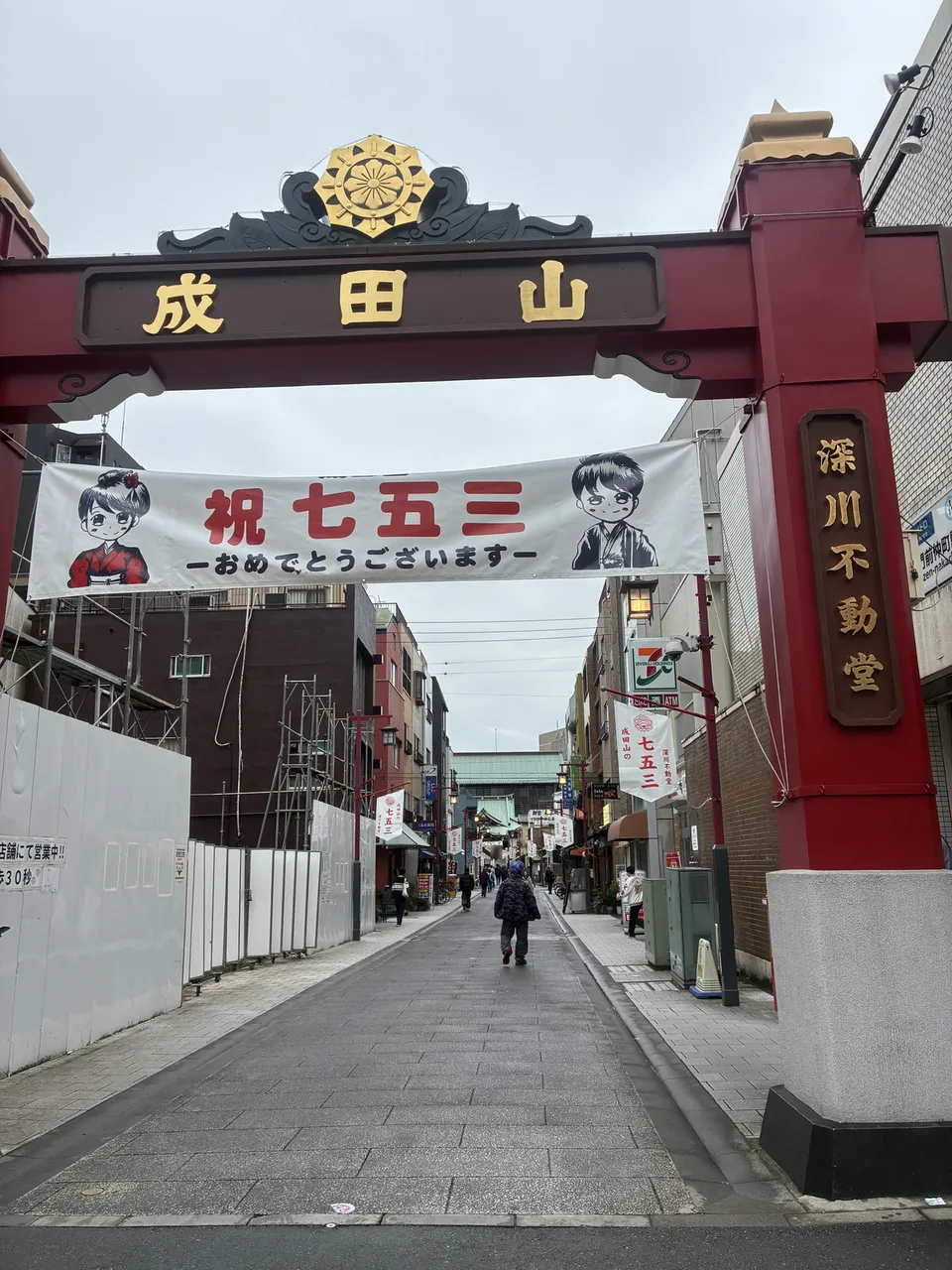 Fukagawa Fudo-do approach, November 10, 2026.
Can foreign visitors watch the goma?
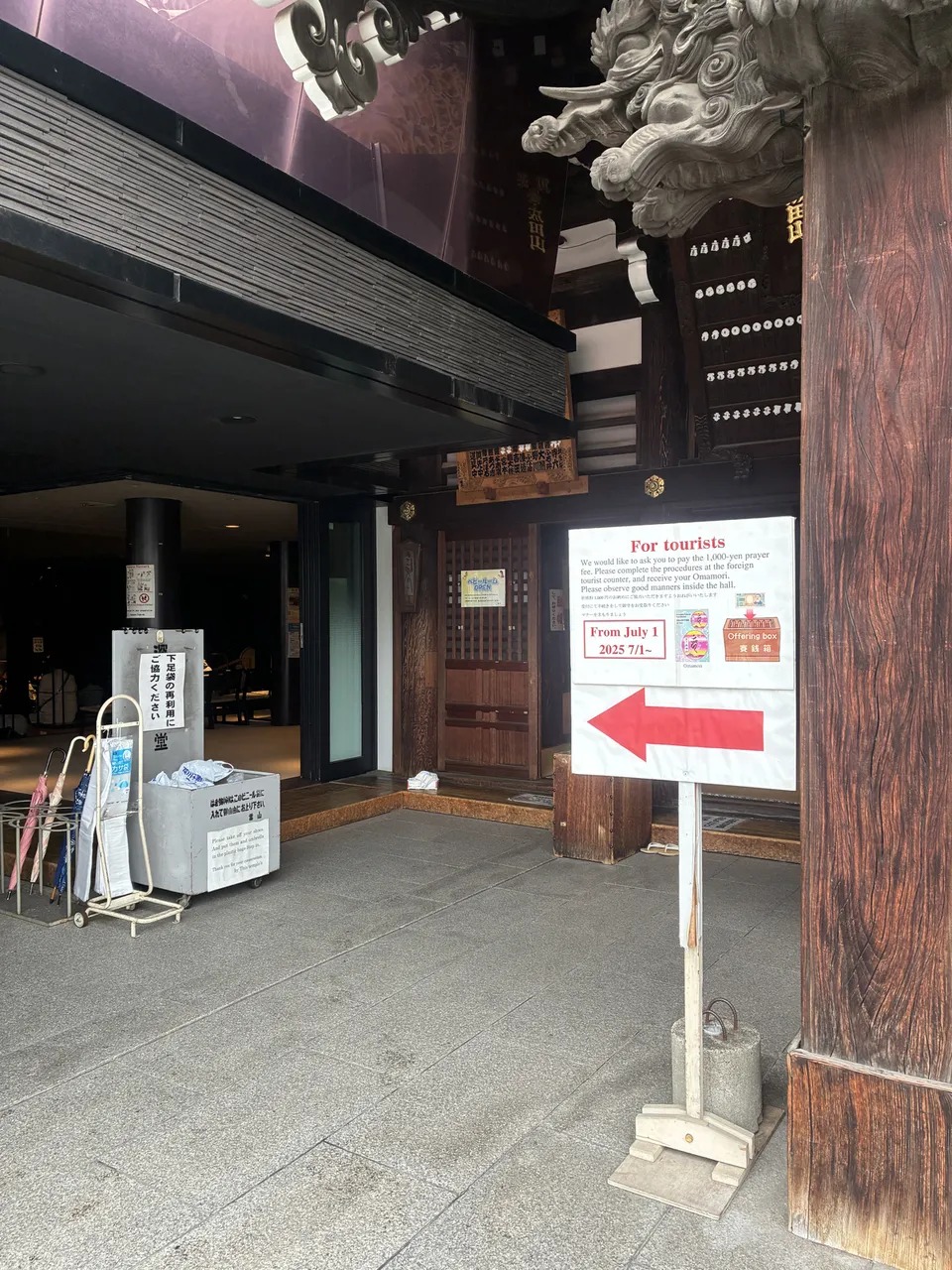
Yes. A sign at the hall asks foreign tourists for a ¥1,000 prayer fee; on my visit, watching from the back cost me nothing.
- The sign: a sign at the hall entrance, dated from July 1, 2025, asks tourists to pay a ¥1,000 prayer fee at the foreign tourist counter, receive an omamori (amulet), and observe good manners inside the hall (pictured below).
- The website: the temple’s page for international visitors says the hall is “a place of worship” and that “from July 1st, we will be restricting entry to the hall by foreign tourists”. It gives no amount.
If you only want to watch from the back, ask at the counter before you go in.
 Fukagawa Fudo-do, November 10, 2026.
What does it cost?
| What | Fee | How |
|---|---|---|
| Hall entry for foreign tourists | ¥1,000, with an omamori | Foreign tourist counter (sign at the hall) |
| Goma-gi prayer stick | ¥500 or ¥700 | Goma-stick office |
| Goma-gi with a goma time you choose | ¥1,000 | Goma-stick office; closes 10 min before that goma |
| Personal goma prayer | From ¥3,000 (amulet or wooden tablet; larger tiers cost more) | No booking needed (FAQ); phone 03-3641-8288 or web form |
Goma-gi and prayer fees are from the temple’s goma page, checked November 10, 2026. The ¥3,000+ is the prayer fee only; the page lists offerings and shipping separately.
What’s the etiquette inside?
- Shoes: the sign on the shoe-bag bin at the entrance reads “Please take off your shoes. And put them and umbrella in the plastic bags”; a notice above it asks you to reuse the bags.
- No photos: a notice in the hall says no photography, so keep your phone away and don’t film the goma.
- Timing: the temple’s FAQ asks people coming for a prayer to arrive with time to spare.
- Keep quiet; it is a working prayer hall, not a show.
When should you go?
Any of the five sessions works. The 15th and 28th are special: on the 15th, after the 11 a.m., 1 p.m. and 3 p.m. goma, visitors may touch a Fudo statue directly, and on the 28th there is a grand goma with offerings (temple website). Fair days on the approach are the 1st, 15th and 28th of every month (Mitsubishi Estate’s Monzen-nakacho town guide). The temple’s own big days include New Year’s Day, January 28 and December 28.
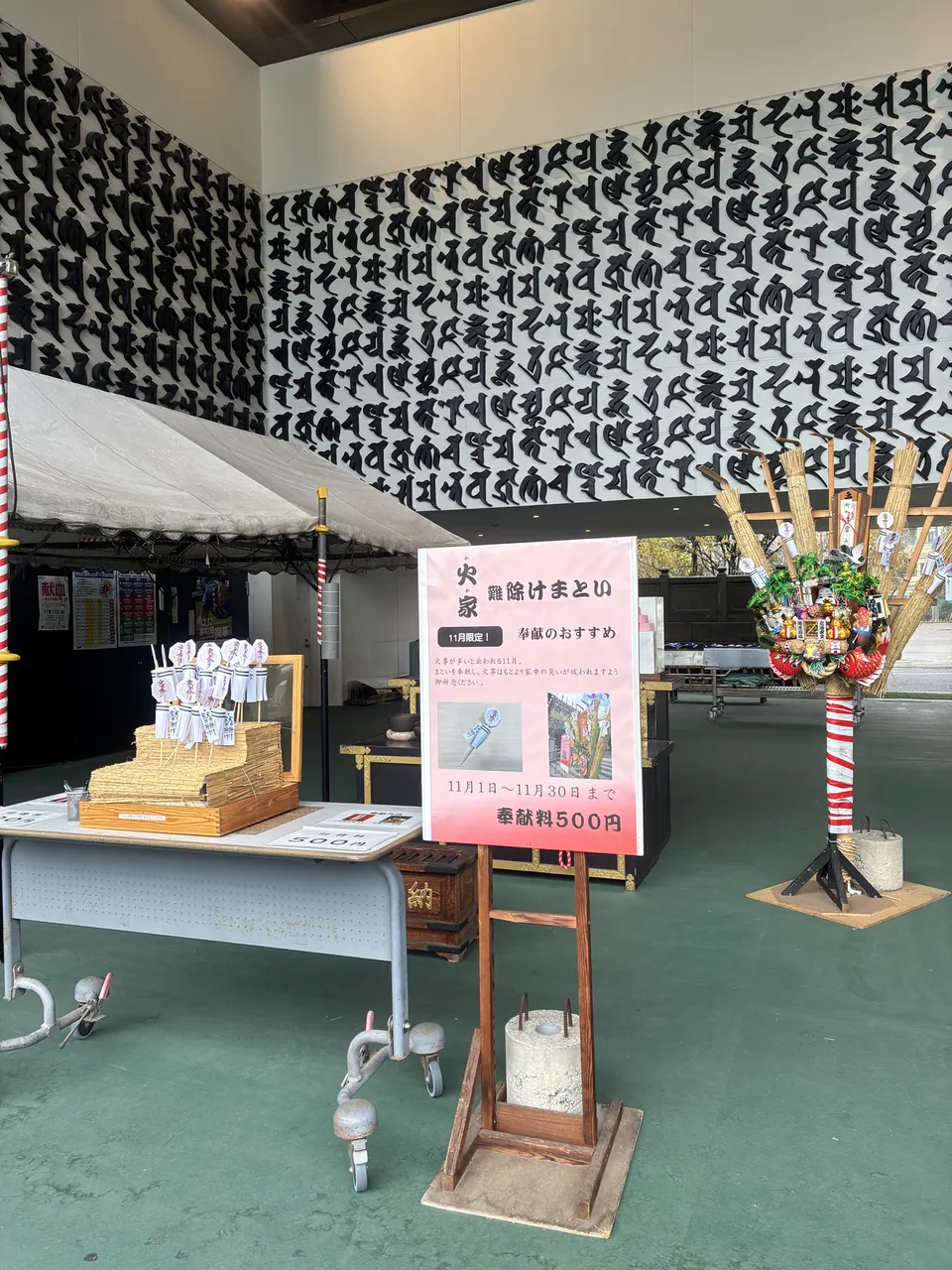
In November the temple holds Shichi-Go-San prayers for children (temple website). A sign on November 10, 2026 offered a ¥500 fire-protection charm (matoi), November 1–30 only.
 Fukagawa Fudo-do, November 10, 2026.
What else is in the precinct?
- The Sanskrit wall: the new main hall is wrapped in Fudo Myoo’s mantra written in Sanskrit letters (Koto City). The temple dates the new hall to September 2012.
- The Inner Hall (Naibutsuden): finished in 2002; floors 1 and 2 are open 9 a.m. to 5:45 p.m., floor 4 to 5 p.m. (temple website).
- The old main hall: built in the 1860s as a Jizo hall at Ryufukuji temple in Chiba and moved here after the 1945 air raids; Koto City lists it as a cultural property.
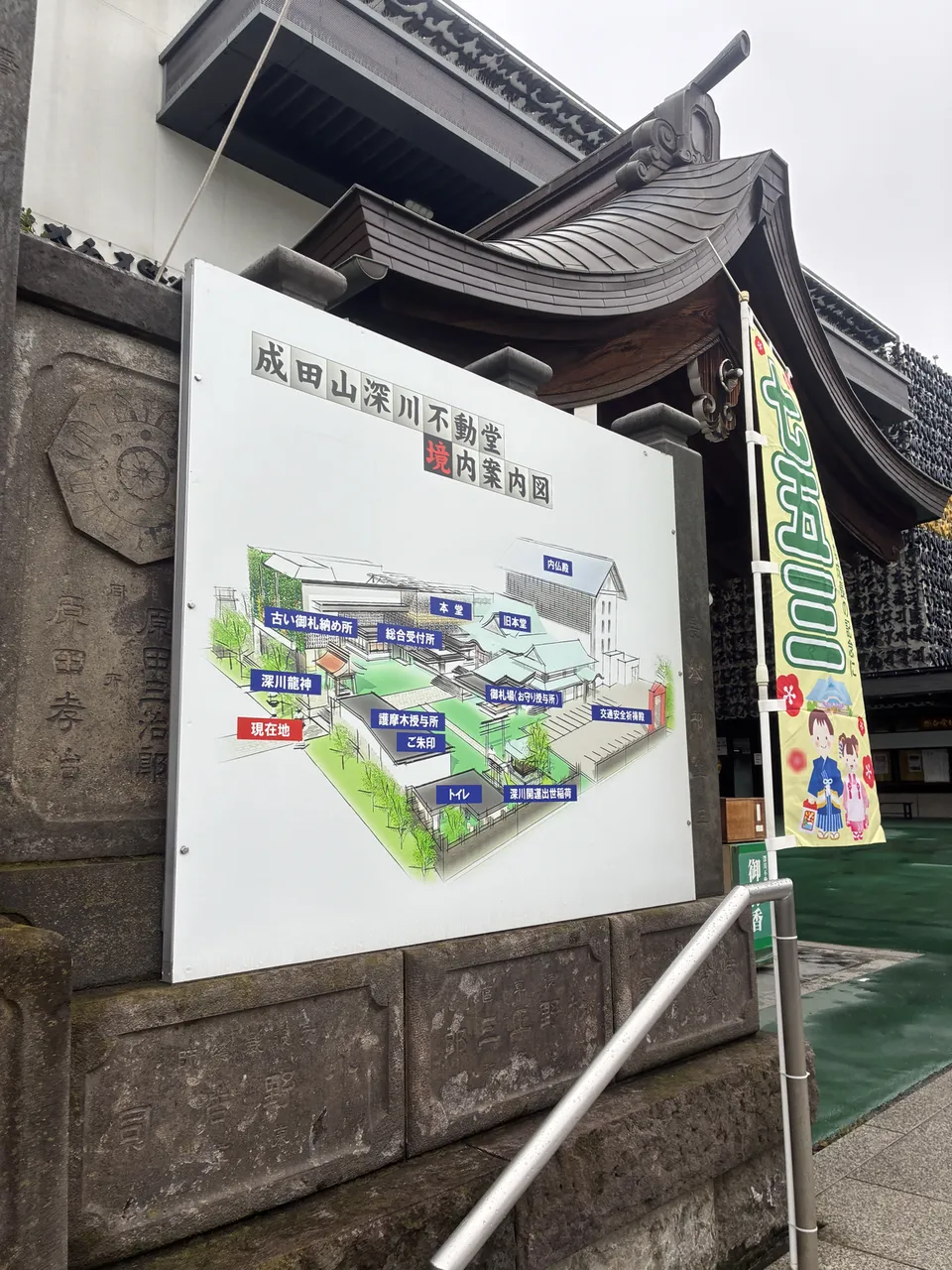 Fukagawa Fudo-do, November 10, 2026.
Why the link with Tomioka Hachimangu?
In 1703 Naritasan first brought its Fudo statue to Edo for public display at Eitaji, the temple that ran Tomioka Hachimangu. Crowds kept coming back, and a permanent hall was set up here in the Meiji era (temple website). Tomioka Hachimangu is still about 100 m to the east.
How do you get there from Asakusa?
Take the Ginza Line from Asakusa to Nihombashi (8 stops), then the Tozai Line two stops east, via Kayabacho, to Monzen-nakacho (Tokyo Metro station pages). From Tozai Line Exit 1 it is about 2 minutes on foot; from Oedo Line Exit 6, about 5 (temple website).
For step-free access, Tokyo Metro lists a street elevator at Tozai Line Exit 2, on the Tomioka-hachimangu side; it says nothing about Exit 1.
The approach, Ninjo Fukagawa Goriyaku-dori, runs about 150 m with some 40 shops (Mitsubishi Estate). One senbei shop, Kikaku, sells rice crackers under a sign that reads “Japan’s hardest senbei”.
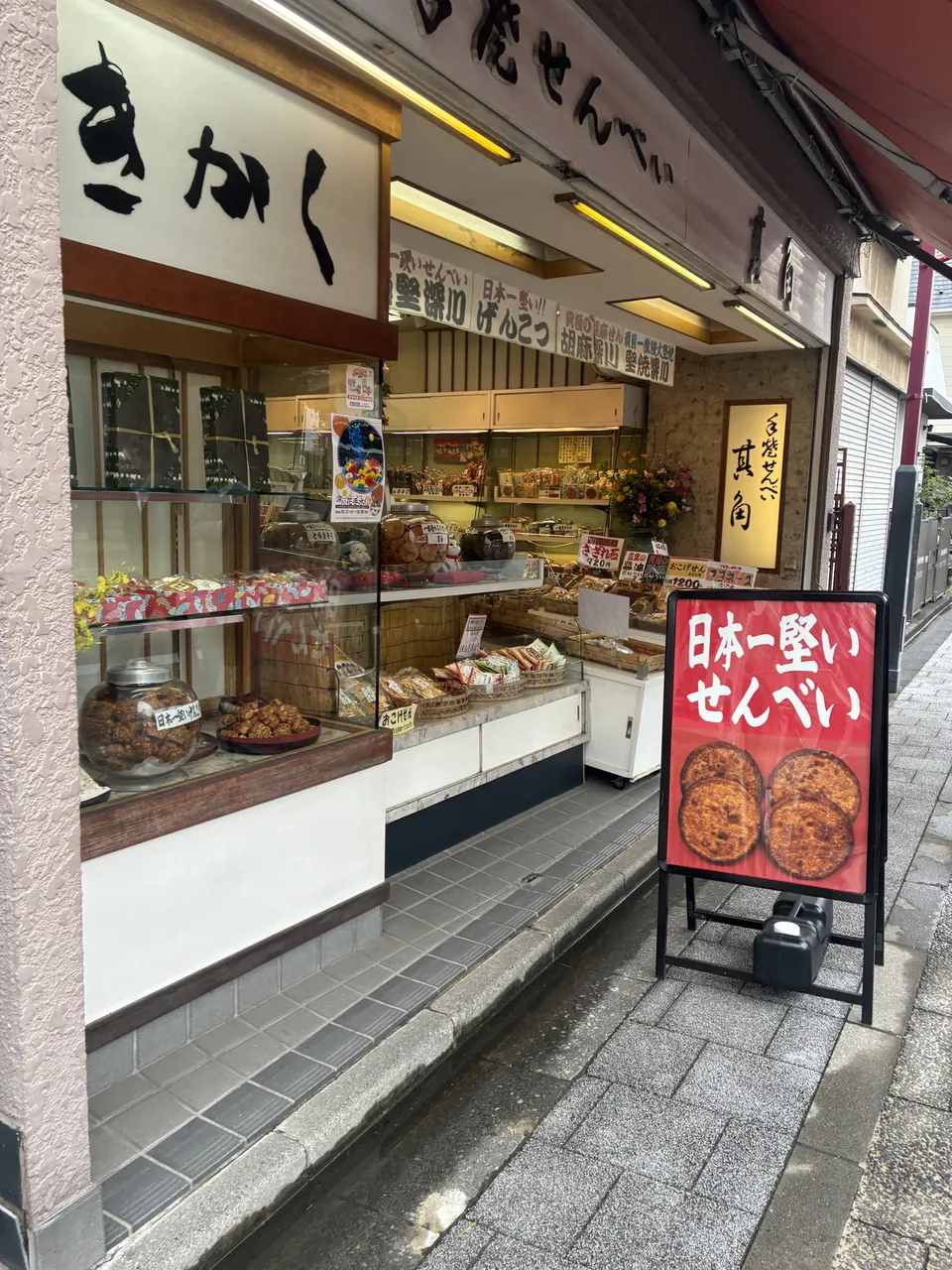 Fukagawa Fudo-do approach, November 10, 2026.
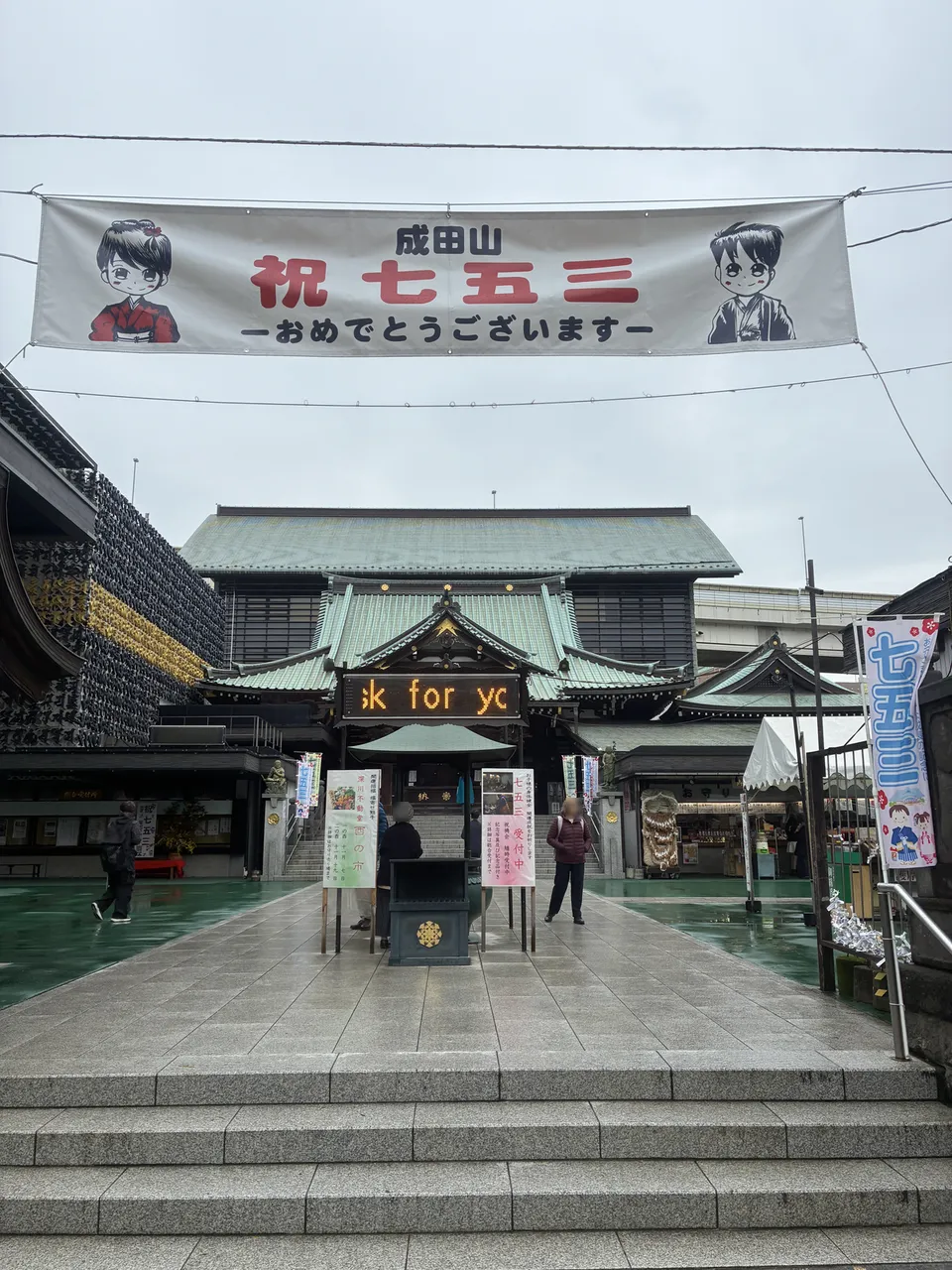 Fukagawa Fudo-do, November 10, 2026.
What’s nearby?
- Tomioka Hachimangu, Fukagawa’s big shrine, next door to the east.
- In November, Asakusa’s Otori Shrine holds Tori-no-ichi, the rake fair; see Tori-no-ichi 2026.
- Planning the rest of your east Tokyo days? Start with Start here.