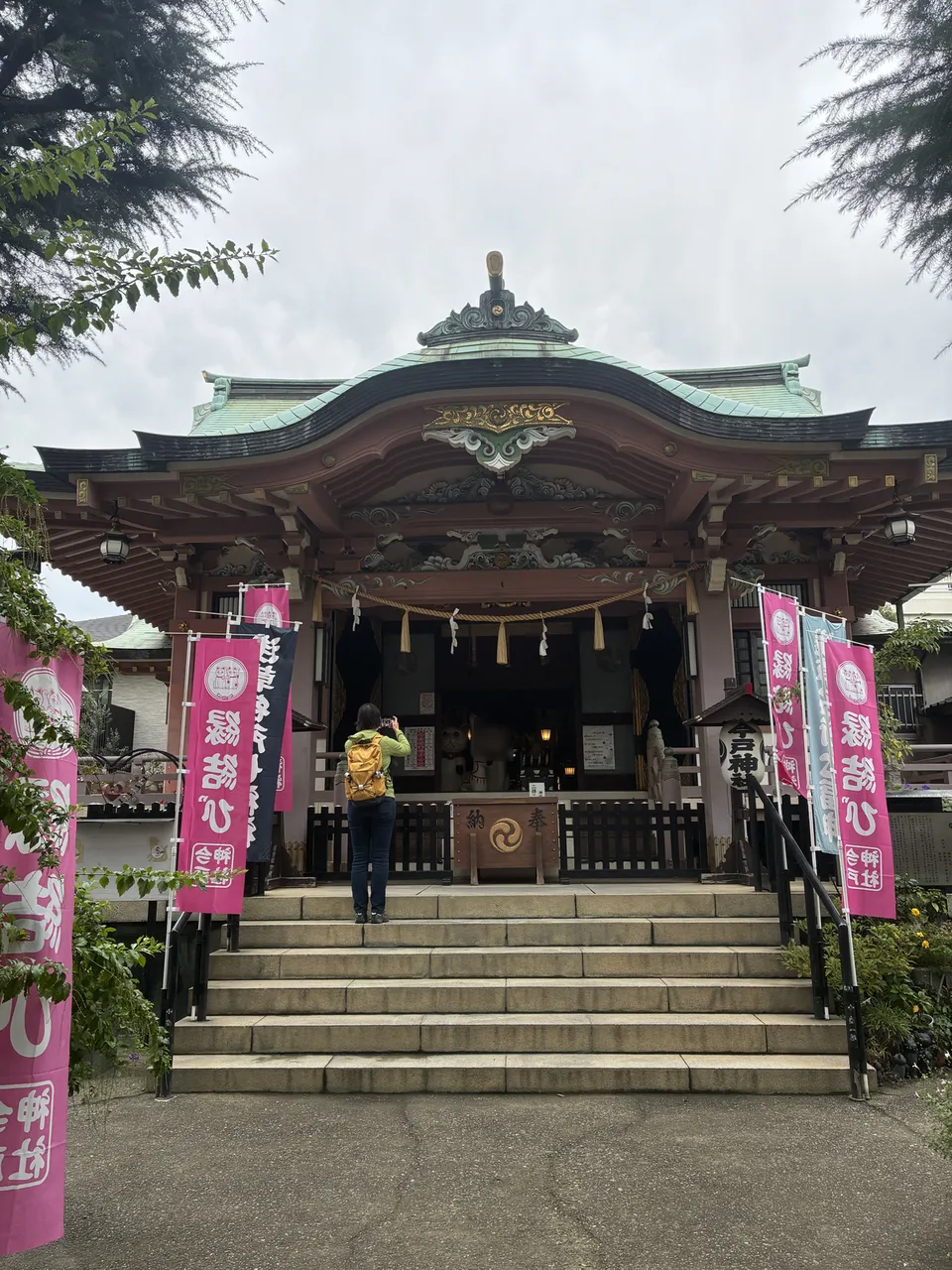
Imado Shrine: the matchmaking shrine of beckoning cats
A small matchmaking shrine by the Sumida, 15 minutes on foot from Asakusa Station. Come in the daytime: the office is open 9 a.m.–4 p.m. every day, and white beckoning cats sit inside the open hall. There is no fee. Allow 20 minutes, and note there are no toilets.
Quick facts
- Shrine office
- 9:00–16:00, every day
- Entry
- Free
- From Asakusa Stn
- About 15 min walk (shrine website)
- Step-free
- Station: Ginza Line Exit 1 has a street elevator. Shrine: stone steps with a handrail up to the hall; gravel and stone paving
- Rain
- Mostly open-air; the water basin and some ema racks are roofed
- Time needed
- About 20 min (est.)
- Toilets
- None (shrine website). Matsuchiyama Shoden, a few minutes south, has restrooms (GO TOKYO)
- Parking
- None
“Maneki-neko are famous in Japan, but no other shrine has taken them in like this one. The grounds are spacious, with benches, and just right for a stroll.”
What is Imado Shrine known for?
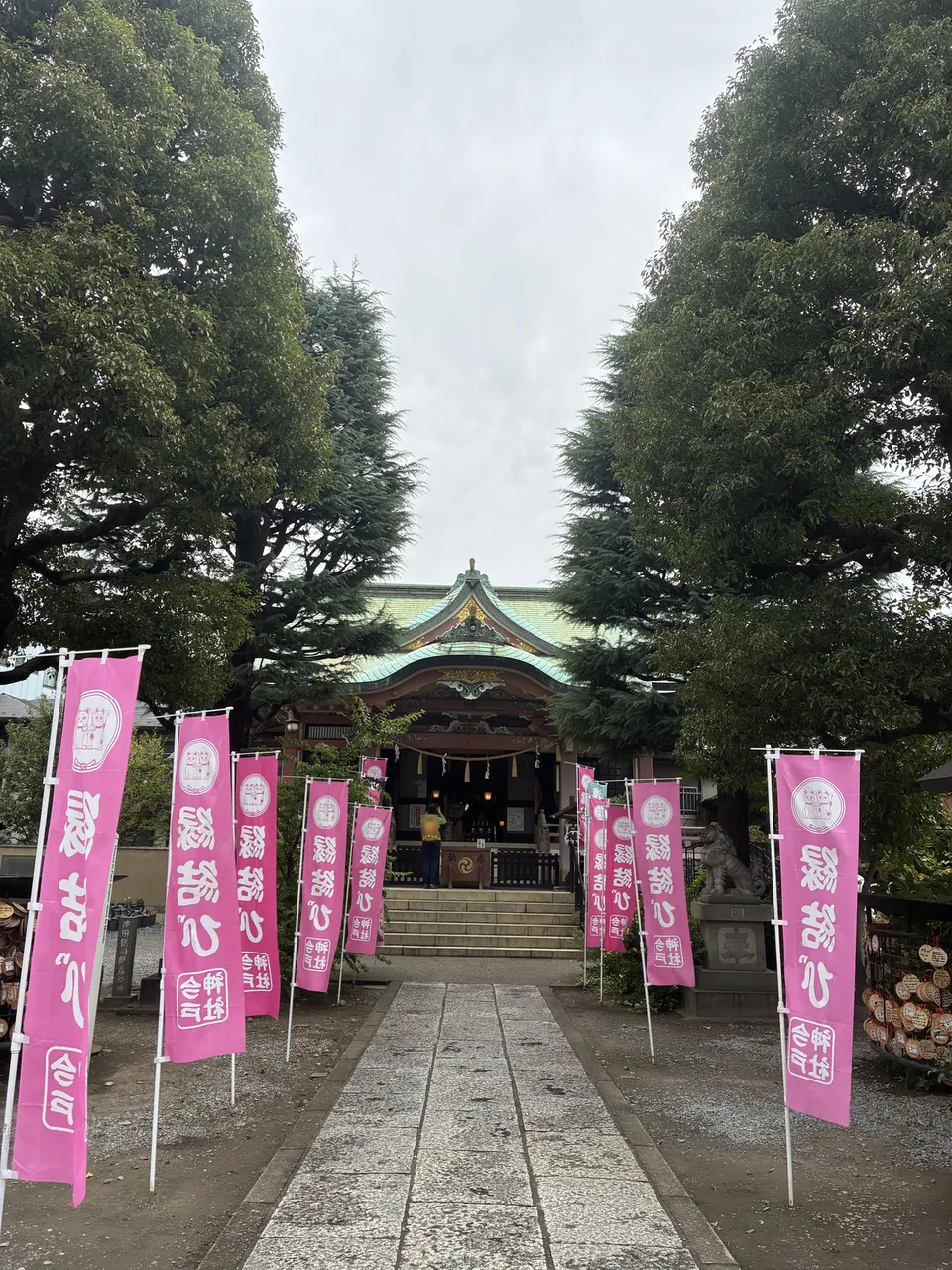
Matchmaking (enmusubi) and cats. Pink banners reading 縁結び line the approach, each printed with a pair of beckoning cats, and the shrine runs its own singles’ meetings (shrine website). Its Fukurokuju makes it a stop on the Asakusa Meisho Shichifukujin, the seven lucky gods of Asakusa (shrine website); a dark blue banner by the hall carries the pilgrimage’s name.
The cats are on the banners, the ema, the signs and inside the hall. The grounds are spacious, with benches, and I found them just right for a stroll on a walk through Oku-Asakusa, the quiet district north of Senso-ji. Open in Google Maps.
 Imado Shrine, October 30, 2026.
 Imado Shrine, October 30, 2026.
What should you look for?
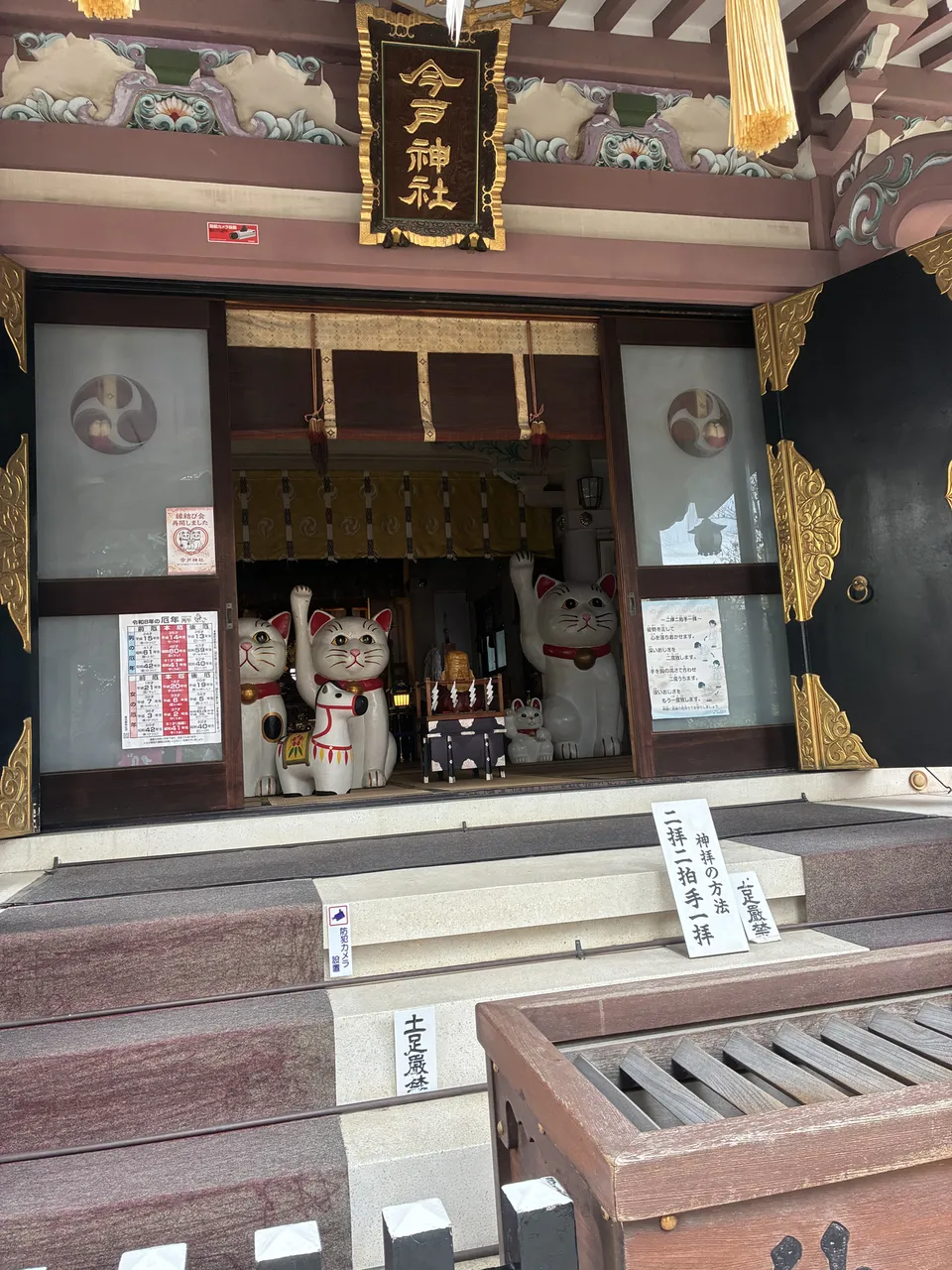
- The beckoning cats in the hall. The hall doors were open on October 30, 2026, with white maneki-neko sitting inside around the altar. A sign on the step gives the way to pray: bow twice, clap twice, bow once.
- Cat ema. The round wooden prayer plaques (ema) are printed with a pair of cats. Hundreds hang in the roofed water-basin pavilion and on a ring of racks around the trunk of a large ginkgo.
- The potters’ komainu. Imado-ware craftsmen gave a stone komainu guardian lion to the shrine, then called Imado Hachiman, in 1752; it was restored in 1822. The inscription on its base names 42 donors, potters and their organizers. It is a Taito City registered cultural property (Taito City).
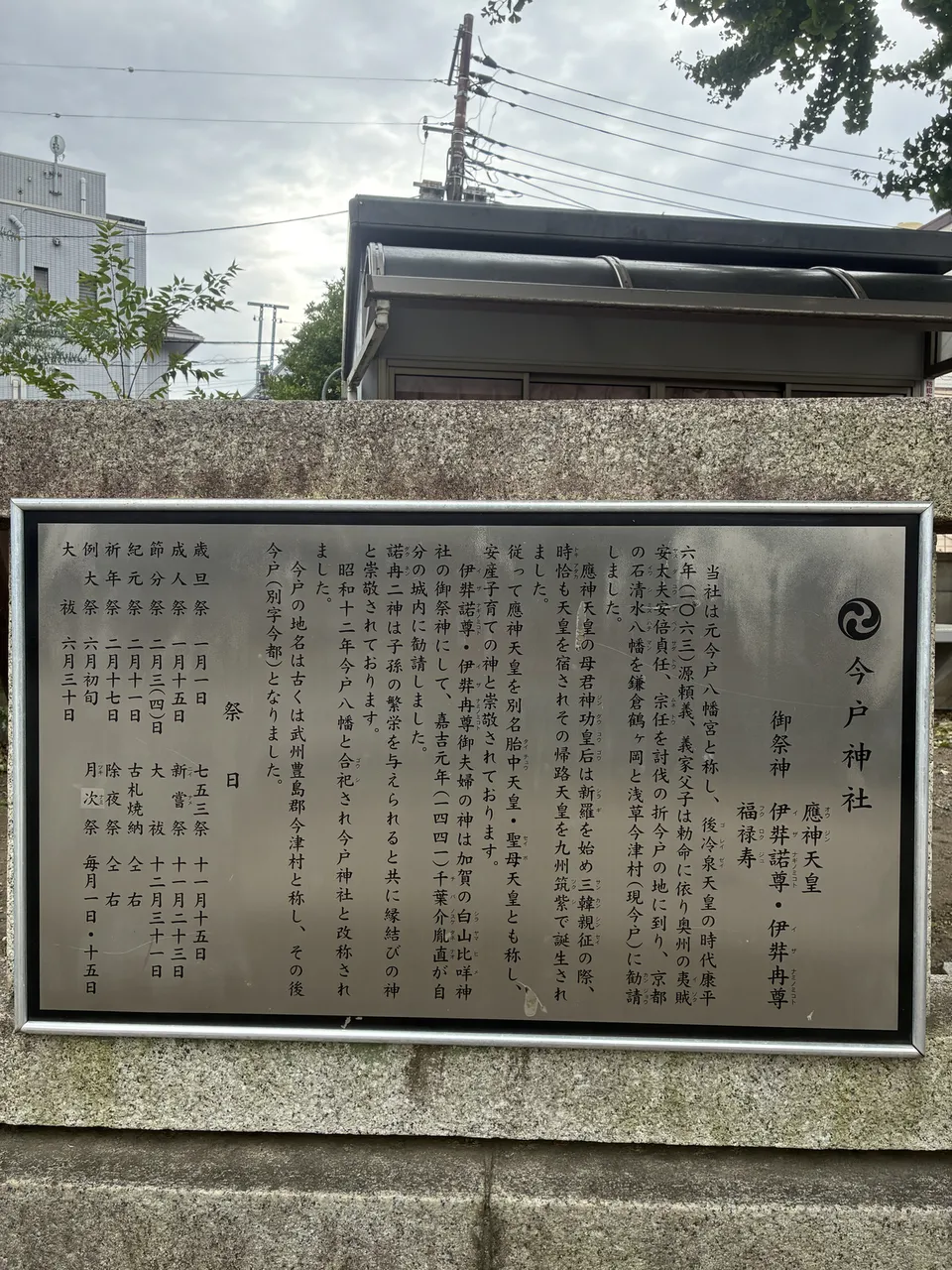
- The plaque by the hall. A metal plaque on a stone wall lists the deities, the history and the festival days, in Japanese only.
 Imado Shrine, October 30, 2026.
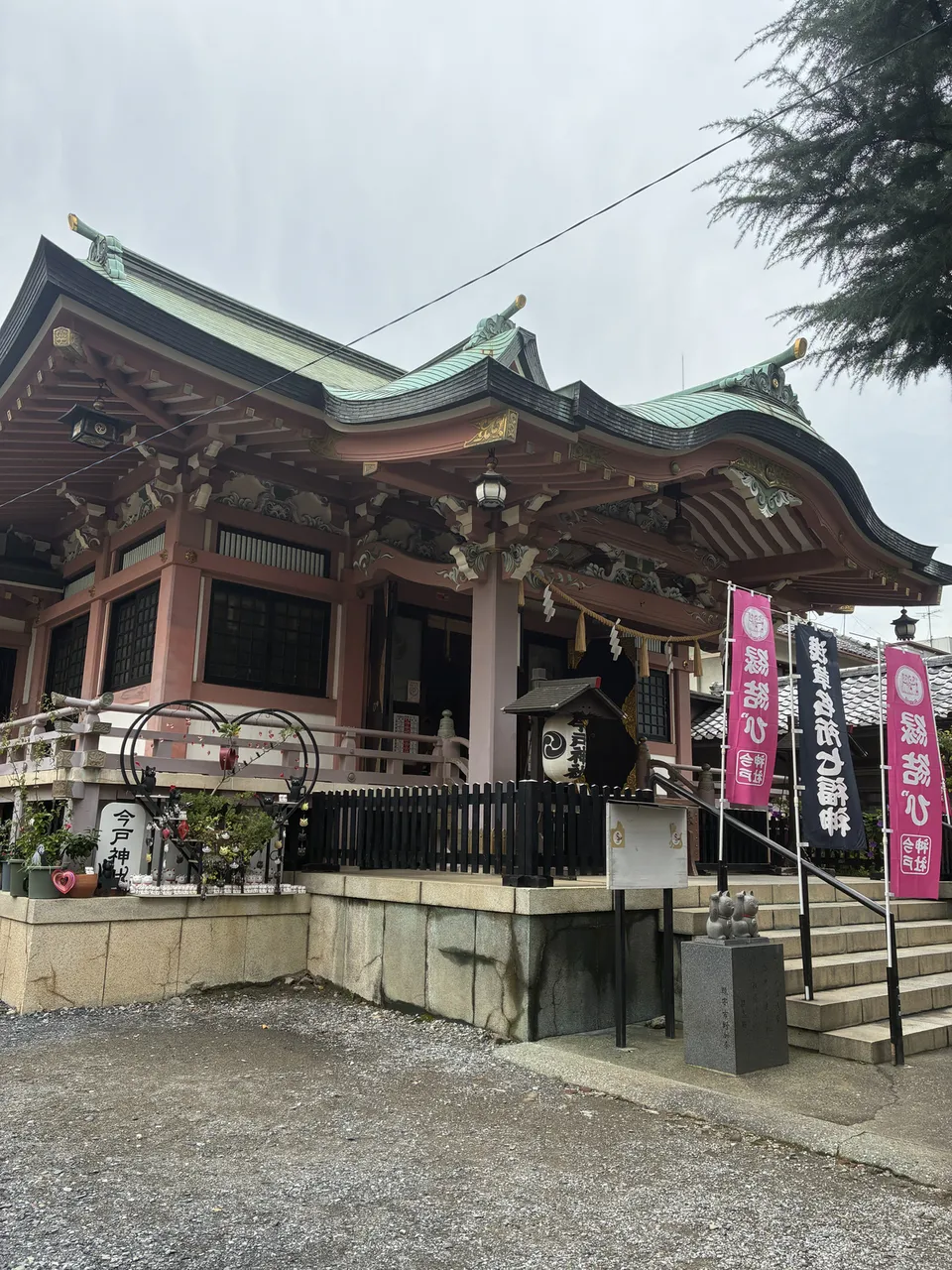 Imado Shrine, October 30, 2026.
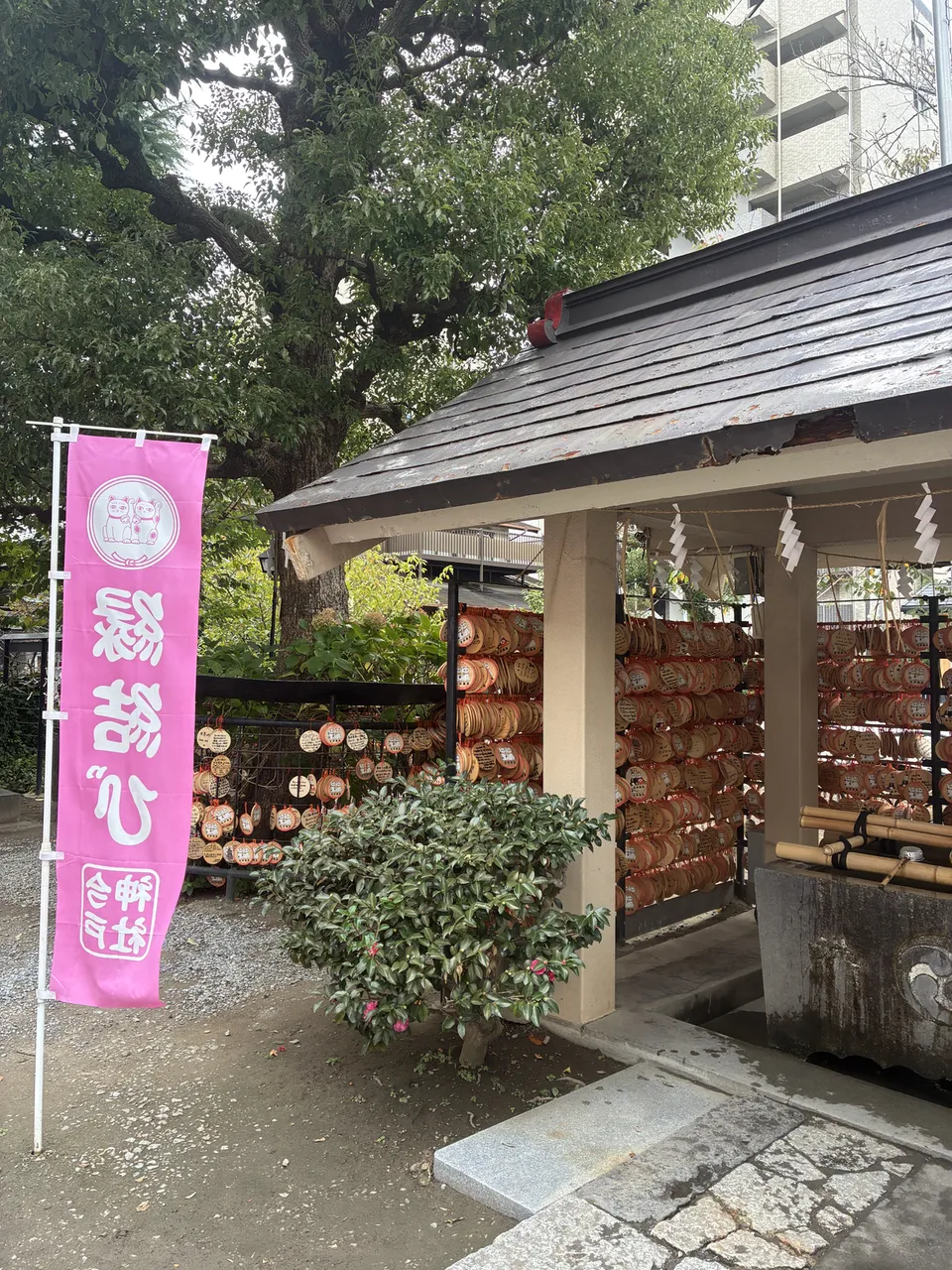 Imado Shrine, October 30, 2026.
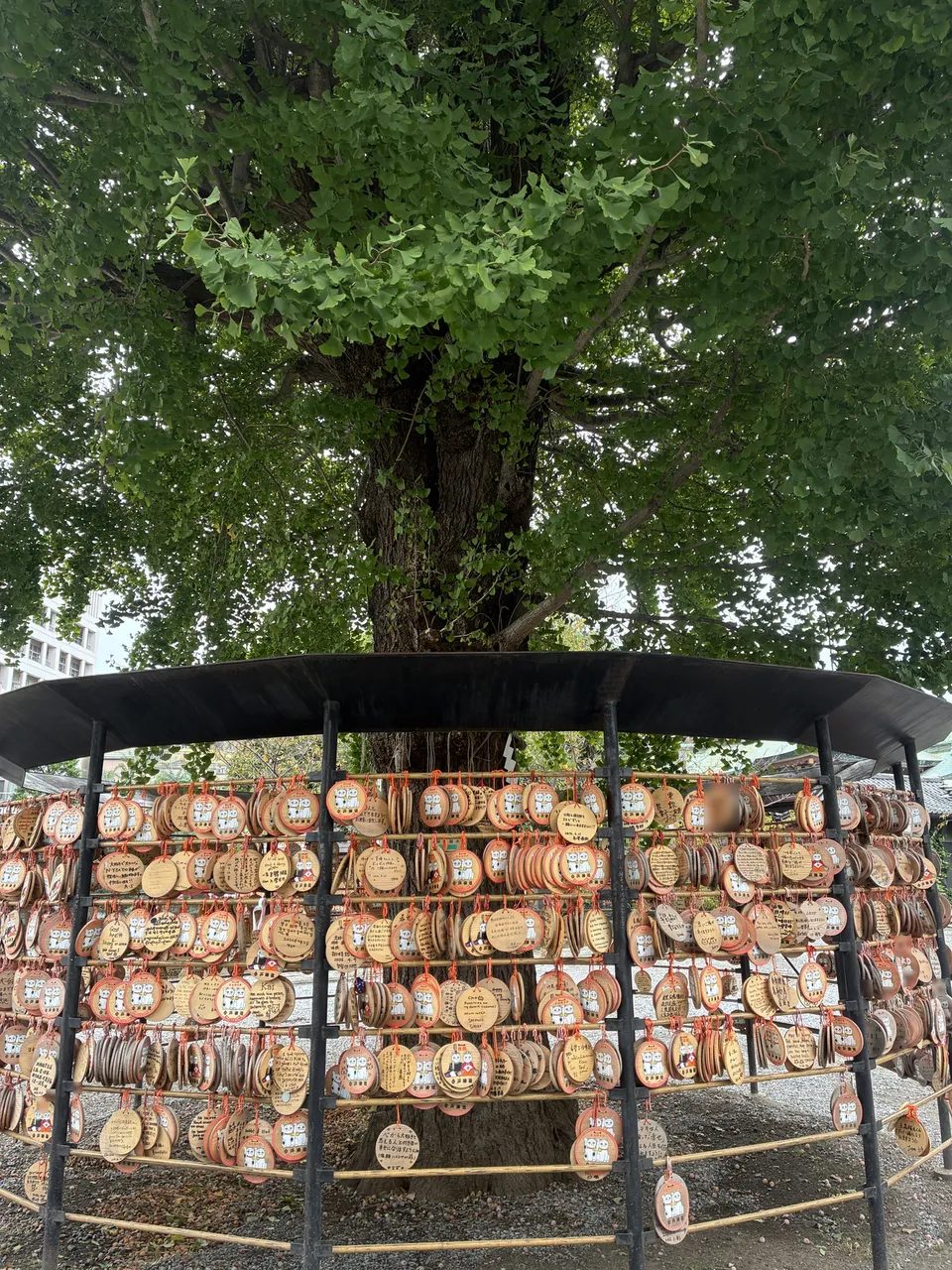 Imado Shrine, October 30, 2026.
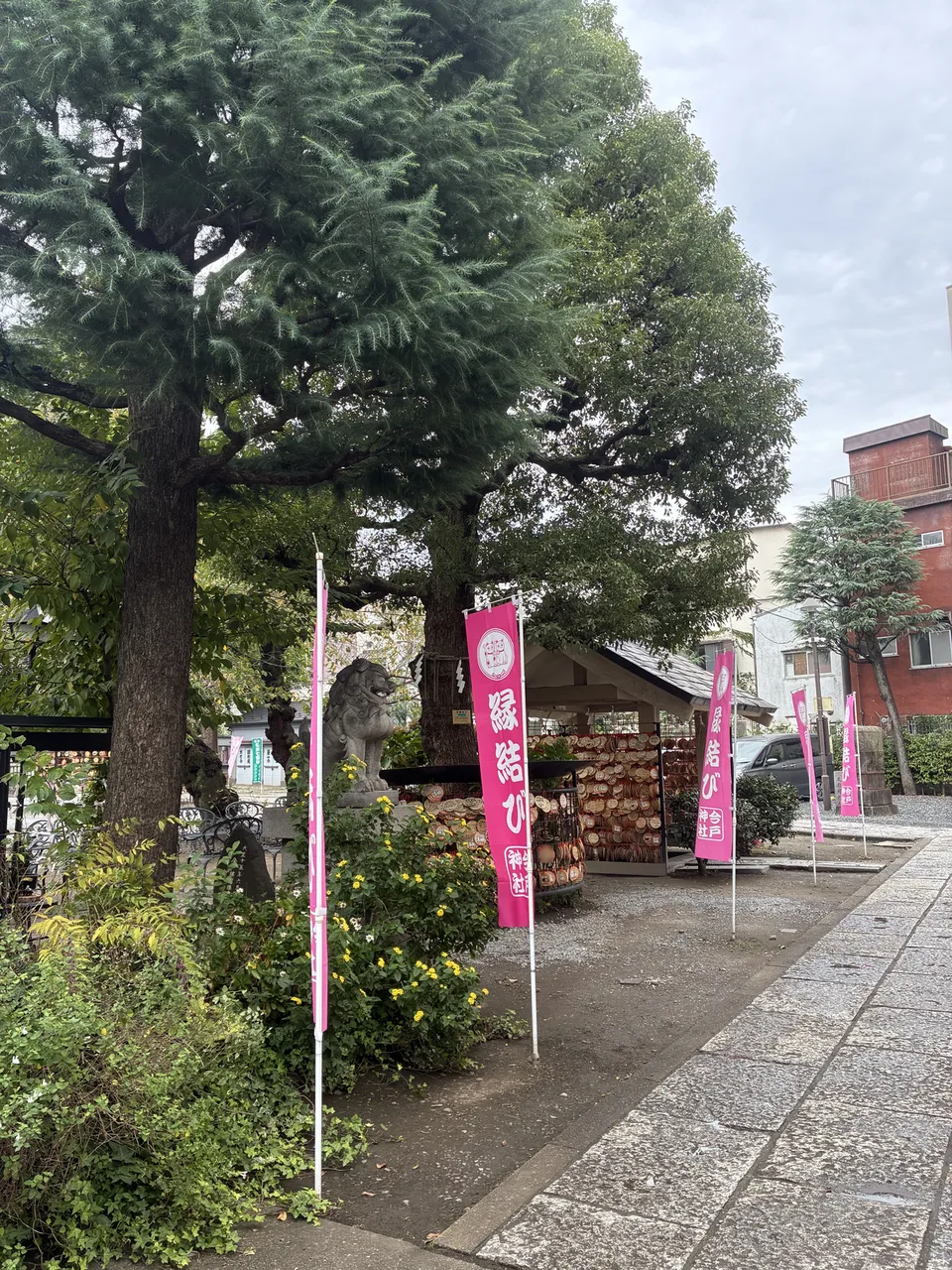 Imado Shrine, October 30, 2026.
Why the cats?
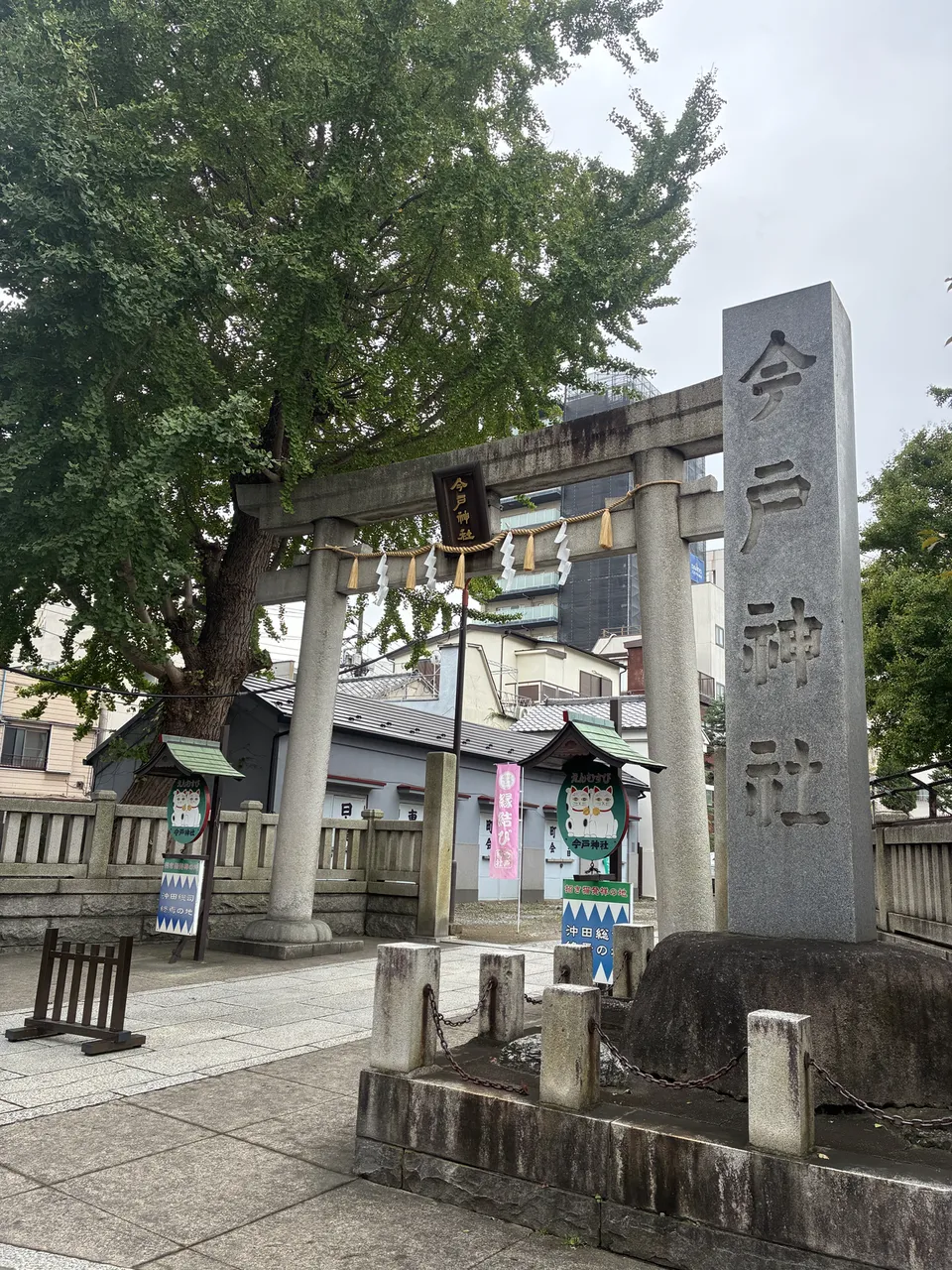
Signs at the gate call Imado the birthplace of the maneki-neko (招き猫発祥の地) and the place where Okita Soji, the Shinsengumi swordsman, died (沖田総司終焉の地).
Imado gave its name to Imado-ware, pottery made here and nearby mainly from the Edo to the Meiji period. More than 50 households made it at the end of the Edo period. One craftsman still works in Taito City, making about 80 kinds of dolls and temple and shrine charms, maneki-neko among them (Taito City).
A short history
According to the shrine’s history, Minamoto no Yoriyoshi and his son Yoshiie founded it in 1063 as Imado Hachiman, bringing the god of Iwashimizu Hachiman from Kyoto. In 1937 it was merged with the Hakusan shrine and renamed Imado Shrine. The buildings were destroyed in the 1923 Great Kanto Earthquake and damaged again in the March 1945 air raid; the present hall was completed in November 1971.
The plaque by the hall names the deities: Emperor Ojin, Izanagi and Izanami, and Fukurokuju. It describes Izanagi and Izanami, a married couple of gods, as gods of matchmaking and of many descendants, which is where the shrine’s matchmaking reputation comes from.
 Imado Shrine, October 30, 2026.
Can visitors join the matchmaking meetings?
Not easily. The shrine’s enmusubi-kai is for single people aged 25–59 who worship at the shrine, with 18 men and 18 women per session and a fee of ¥10,000. You first register in person at the shrine office (ID: a My Number card, or a driving license or similar), then apply only by reply-paid postcard (shrine website, October 2026). With the in-person registration, postal application and Japanese-only page, it isn’t set up for short-term visitors (our reading).
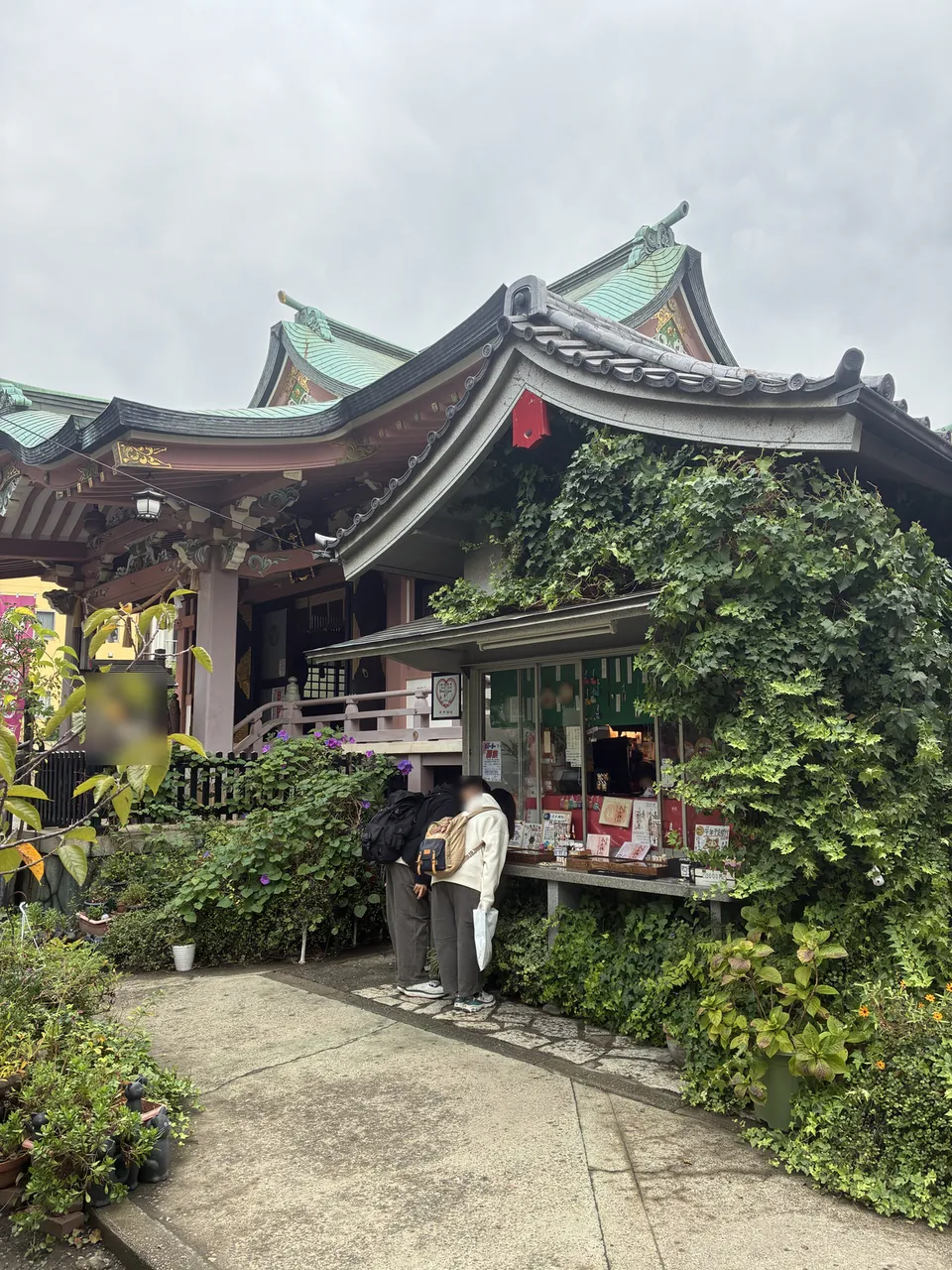
What anyone can do is pray, write an ema or buy a charm at the shrine office. Goshuin (shrine stamps) are pre-written only, apart from the Seven Lucky Gods shikishi board and fuku-e picture (shrine website).
 Imado Shrine, October 30, 2026.
When to go
Any day while the office is open, 9 a.m.–4 p.m. Festival days, from the shrine website and the plaque:
- Setsubun: February 3 (or 4).
- Annual festival (Reitaisai): the first Saturday and Sunday of June.
- Shichi-go-san: November 15.
- Monthly festival: the 1st and 15th of every month.
Getting there
The best way is to walk north from Asakusa along the Sumida River, stopping at Matsuchiyama Shoden on the way.
About 15 minutes on foot from Asakusa Station (shrine website; it doesn’t say which line). For step-free access, Ginza Line Exit 1 at Asakusa has a street elevator (Tokyo Metro). Toei buses also stop close by: Asakusa 7-chome on route 甲 (about 5 minutes’ walk), or Riverside Sports Center-mae on route 乙 and the Kita-Megurin community bus (about 1 minute) (shrine website).
The address is 1-5-22 Imado, Taito City. There are no toilets and no parking (shrine website).
Nearby
Matsuchiyama Shoden, the hilltop temple with daikon radish offerings, is about 350 m south on foot, 5 minutes (OpenStreetMap foot route), and has restrooms, including a multi-purpose toilet (GO TOKYO). Imado Shrine is stop 5 on the Oku-Asakusa walk, which links it with Otori Shrine, the old Yoshiwara gate and Edo’s kabuki theater sites.