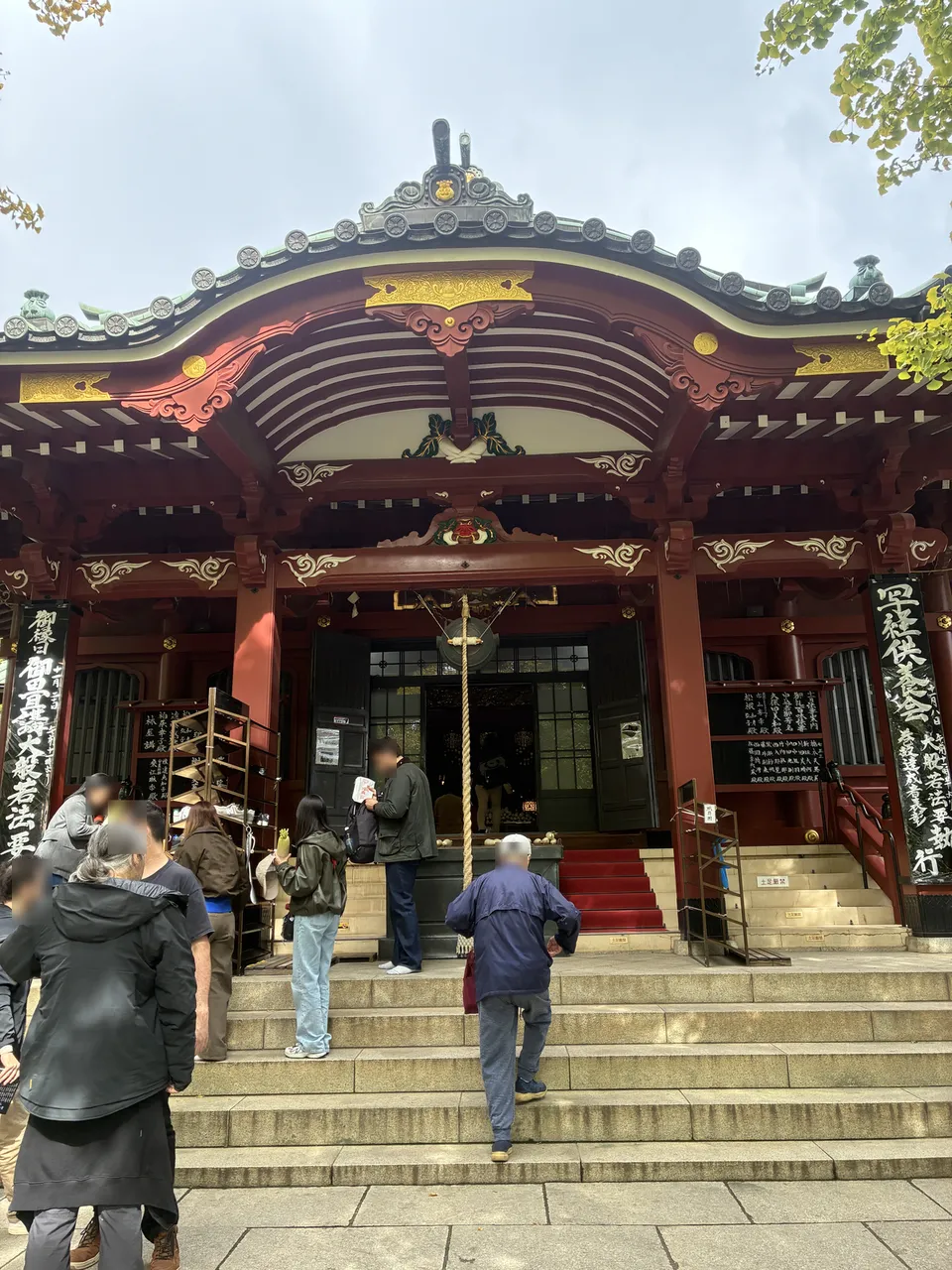
Matsuchiyama Shoden: Tokyo's radish temple by the Sumida
My top pick of the places I walked to in Oku-Asakusa: a small branch temple of Senso-ji on a hill by the Sumida, known for daikon radish offerings. Free, open 6 a.m.–4:30 p.m.; allow about 20 minutes. It is about 10 minutes on foot from Asakusa Station; an offering radish was ¥300 on October 30, 2026.
Quick facts
- Hours
- 6:00–16:30 daily (last entry 16:25)
- Entry
- Free (offering radish ¥300)
- From Asakusa Stn
- About 10 min walk (Exits 7, A5)
- Step-free
- Tokyo Metro confirms a street elevator only at Ginza Line Exit 1; GO TOKYO lists a wheelchair-accessible elevator at the temple
- Time needed
- About 20 min
- Toilets
- Yes, incl. multi-purpose (GO TOKYO)
- Rain
- Outdoor grounds and open stone steps up to the hall
- Kids
- Wide stone steps up to the hall
“My top pick is Matsuchiyama. The park next to it is under construction right now, and it is due to reopen, renewed, around next spring.”
Is Matsuchiyama Shoden worth the walk?
Yes. Of the places I walked to on the Oku-Asakusa walk, this is my top pick. It is a branch temple of Senso-ji, properly called Honryu-in (GO TOKYO, Taito City), on a small hill a short walk from the river. Come for the radishes, the carved purses and the history of the hill.
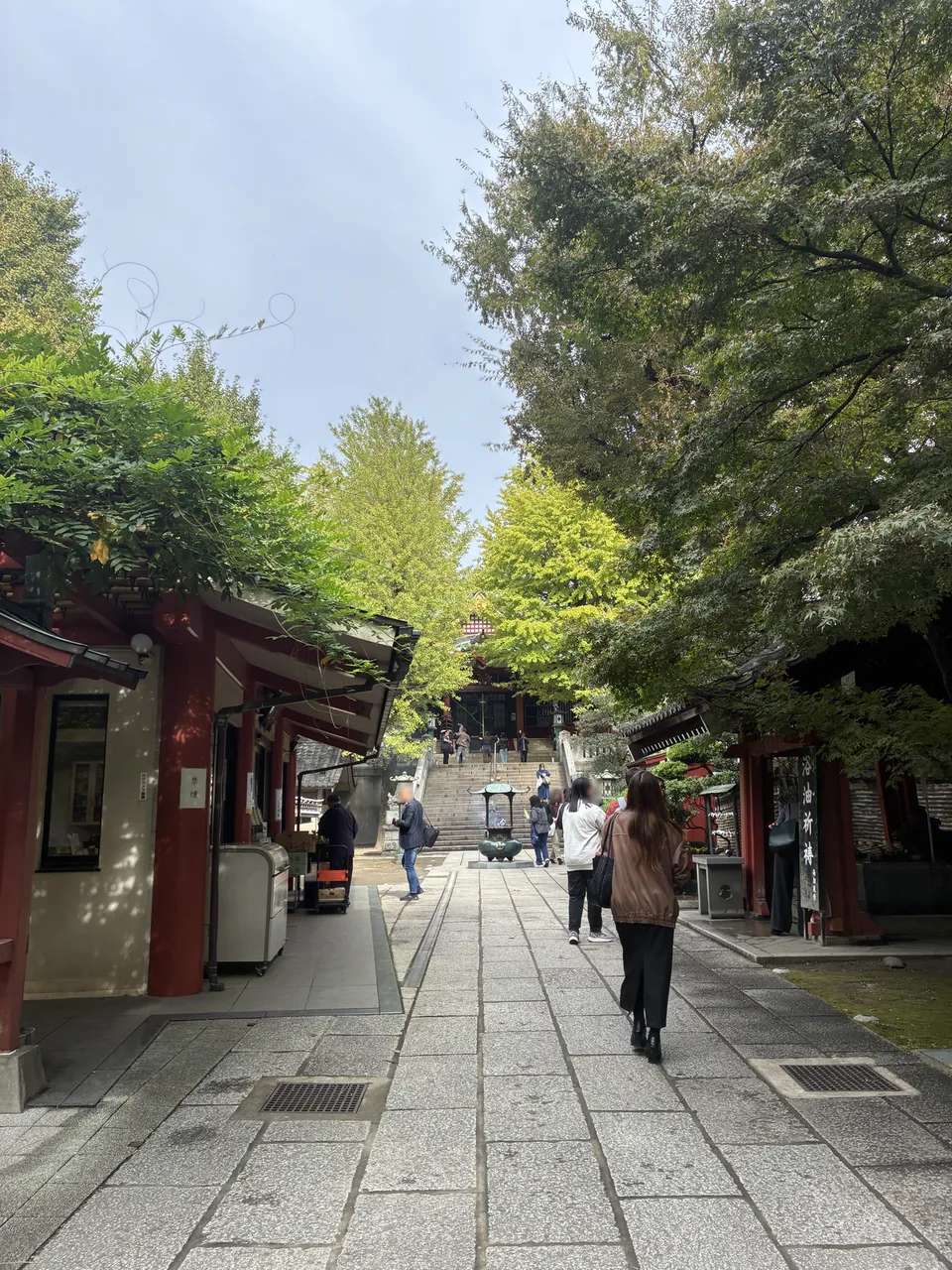 Matsuchiyama Shoden, October 30, 2026.
Why the hill?
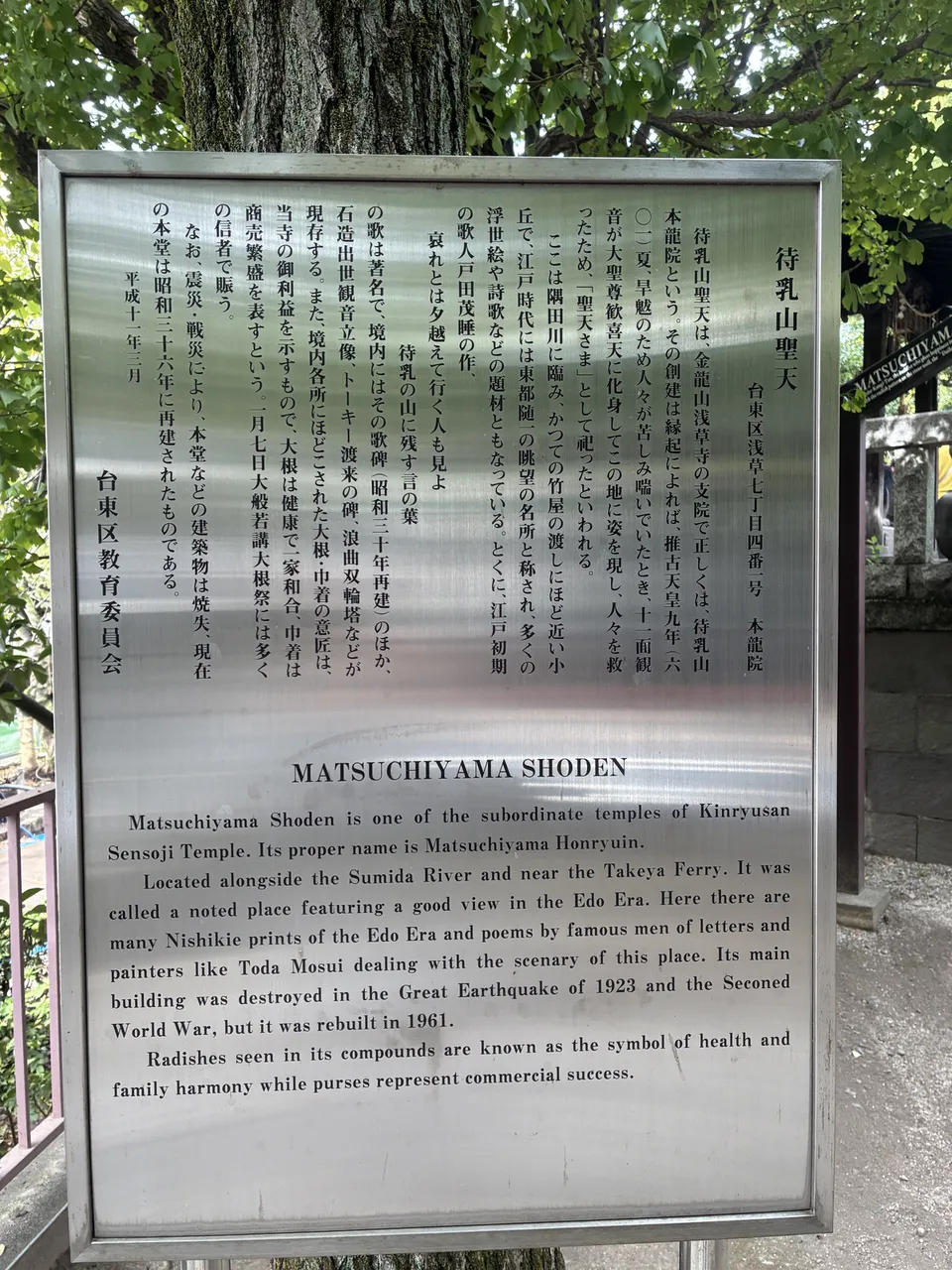
Matsuchiyama is a small hill beside the Sumida River, close to where the old Takeya ferry crossed. In the Edo period it was called the finest viewpoint in the eastern capital, and it shows up in many ukiyo-e prints and poems (Taito City). One poem, by the early Edo poet Toda Mosui, is carved on a monument in the grounds.
The temple’s buildings were lost in the 1923 earthquake and again in the war. The main hall you see today was rebuilt in 1961, according to both Taito City’s website and its sign at the entrance (pictured below).
 Matsuchiyama Shoden, October 30, 2026.
What are all the radishes for?
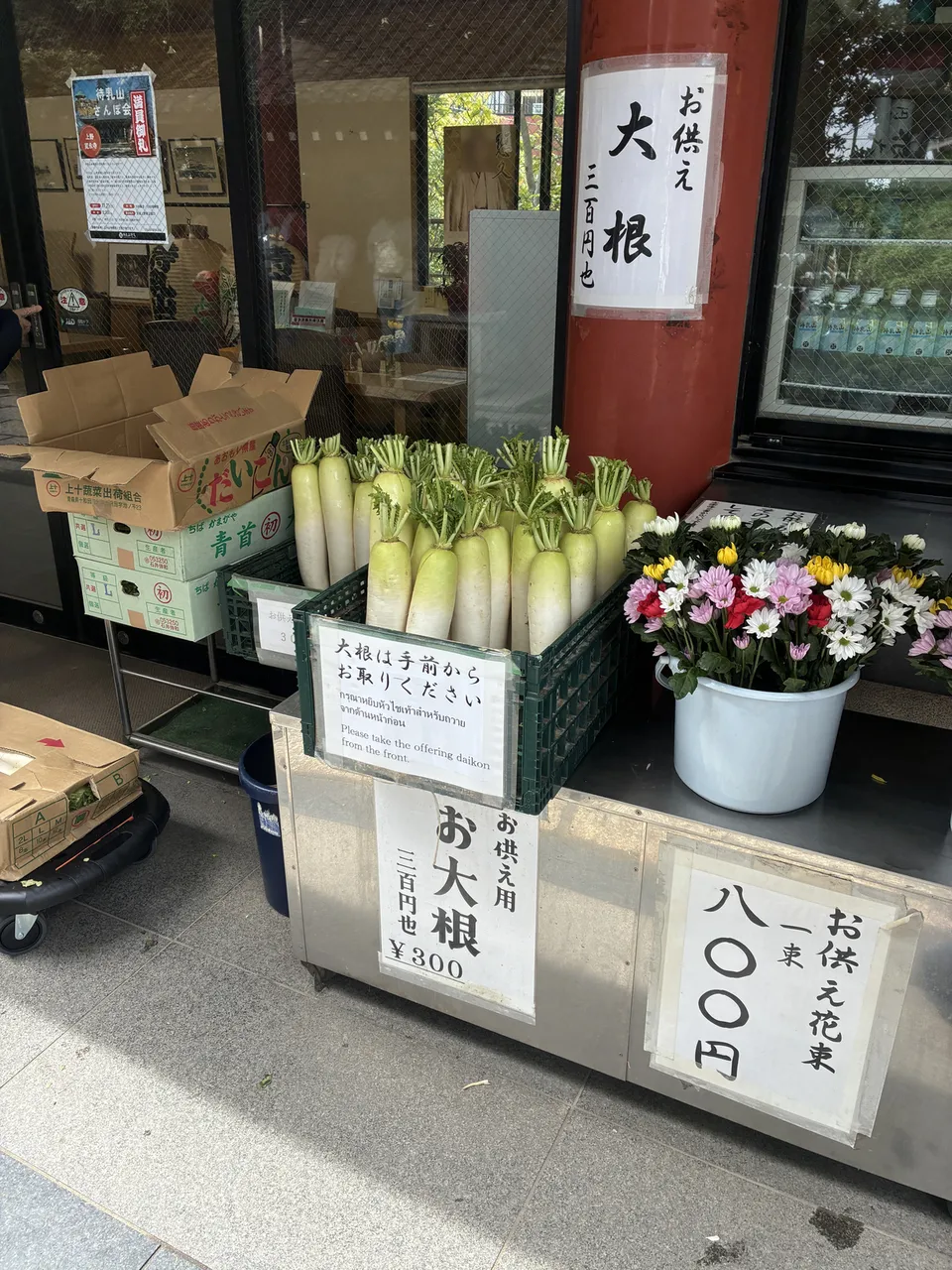
Daikon radishes and drawstring purses (kinchaku) are carved and painted all over the grounds. The radish stands for good health and harmony in the family, and the purse for business success (Taito City). A stand in the grounds sells radishes labelled for offering (お供え用), and offered radishes lie in rows in front of the main hall.
Price signs at a stand in the grounds on October 30, 2026 read ¥300 for an offering radish and ¥800 for a bunch of offering flowers. A sign in Japanese, English and Thai asks you to take the radish from the front of the crate.
 Matsuchiyama Shoden, October 30, 2026.
The hall sits at the top of a wide flight of stone steps. A sign at the bottom says temple stamps (goshuin) are given inside the main hall.
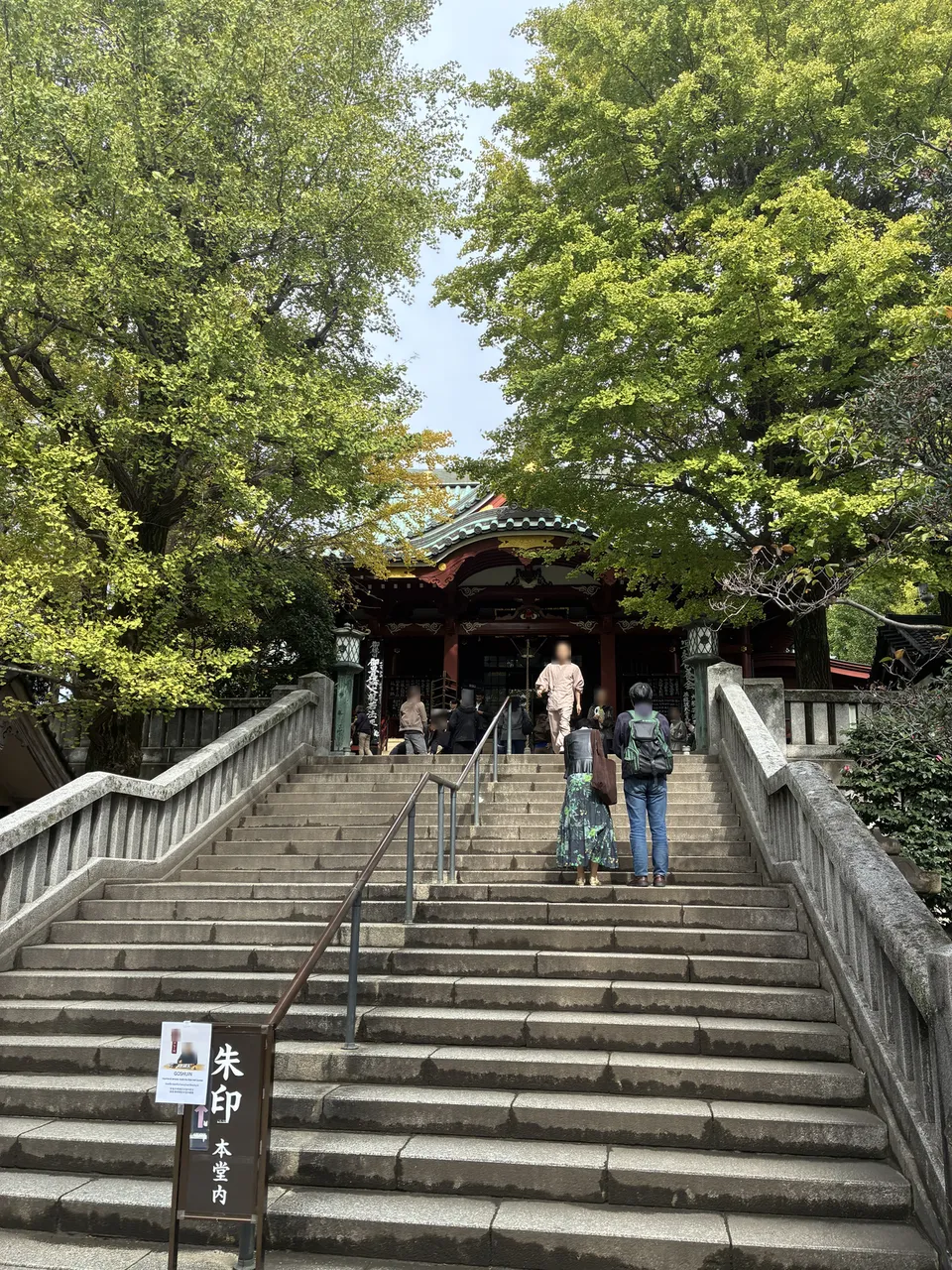 Matsuchiyama Shoden, October 30, 2026.
Up at the hall, offered radishes lie in rows on the wooden step in front of the entrance.
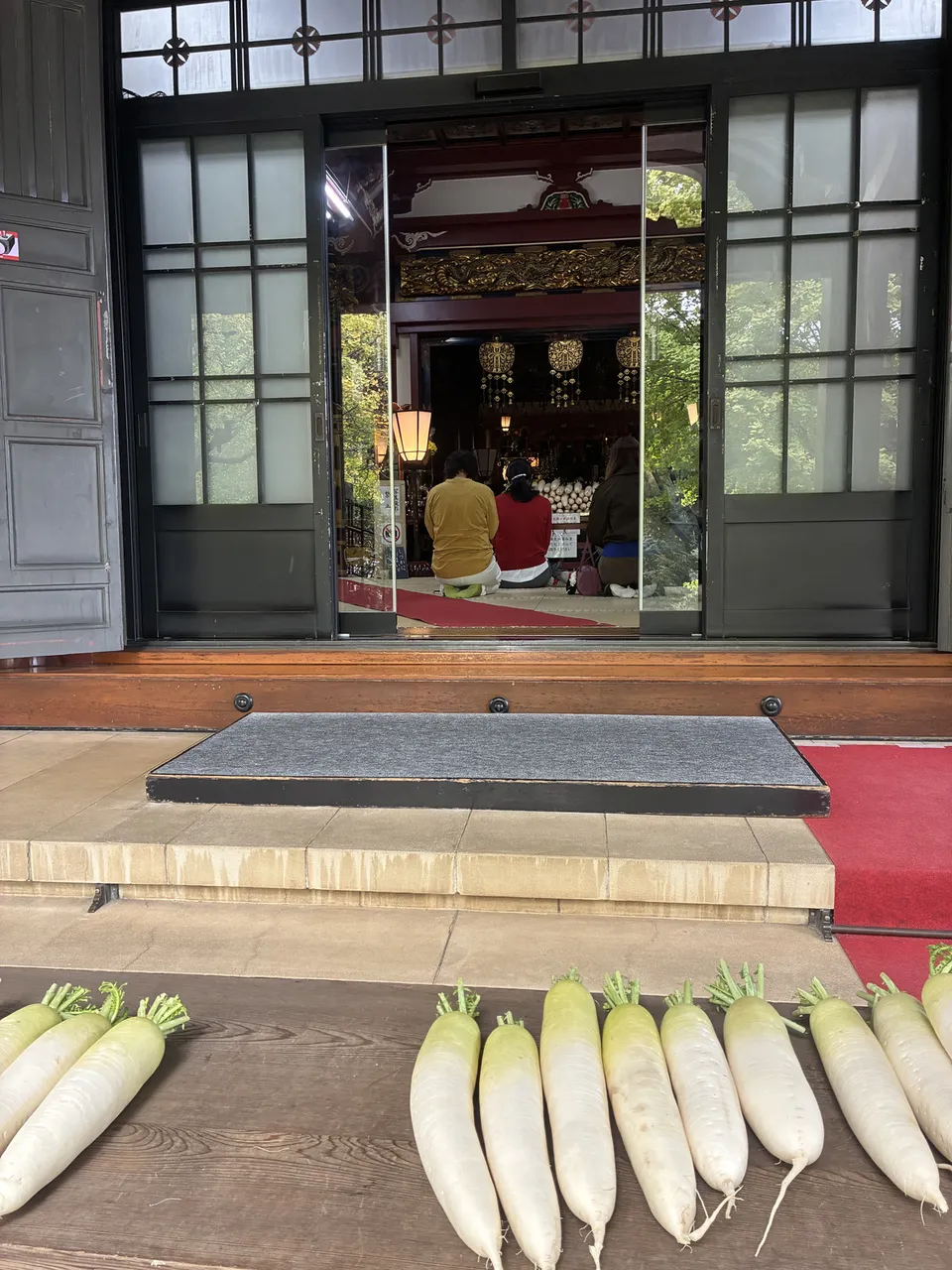 Matsuchiyama Shoden, October 30, 2026.
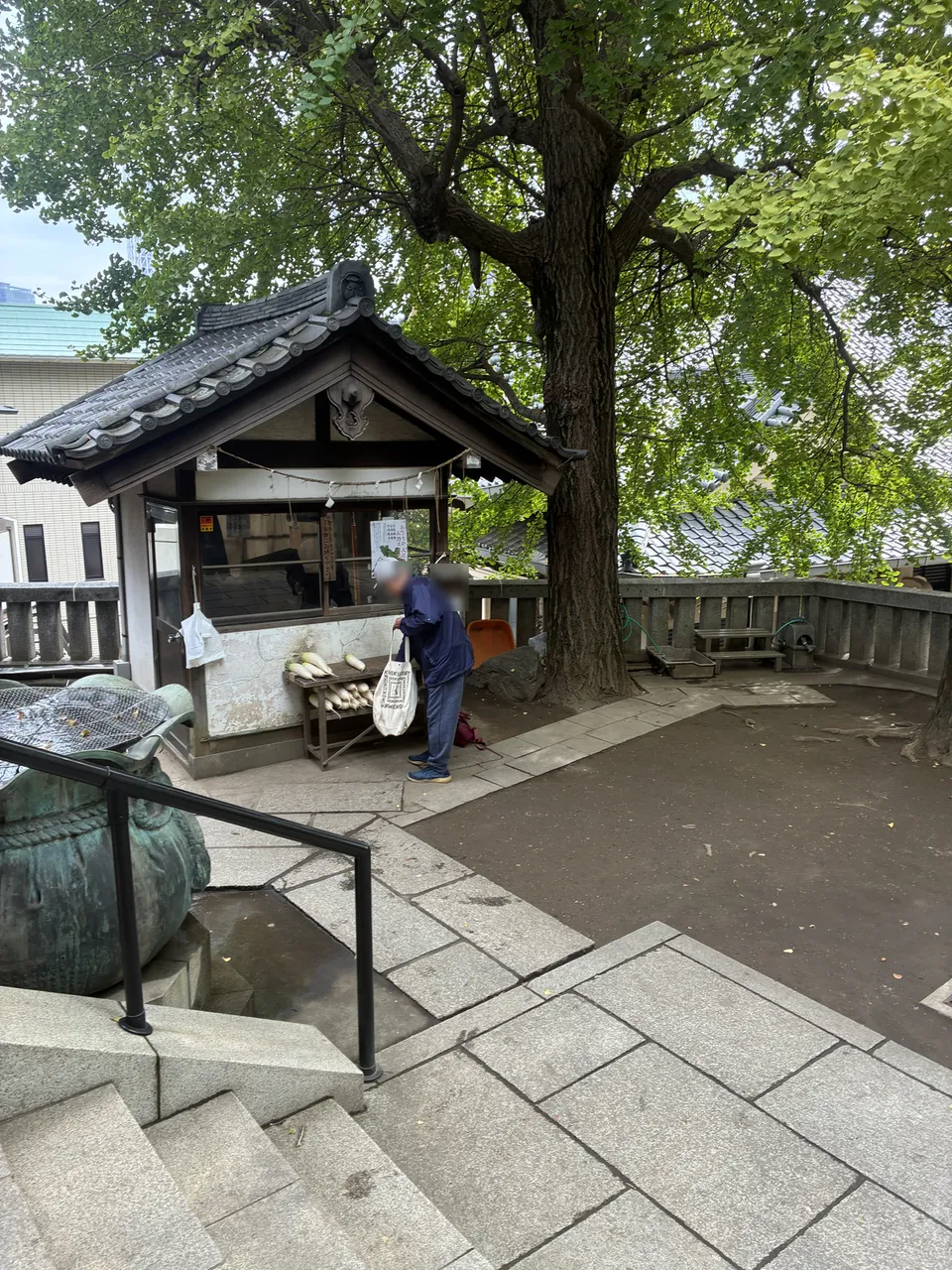 Matsuchiyama Shoden, October 30, 2026.
What else should you look for?
- The carvings: the stone balustrade along the steps has panels carved with a radish and a purse.
- The bronze hokyoin pagoda: made in 1781 and given by 16 rice brokers from Kuramae. Taito City says it is the only one in the ward that survives almost as it was made, and registered it as a ward cultural property in 2002.
- More monuments: a stone Shusse Kannon, a monument to the arrival of talking pictures, and a pagoda for rokyoku storytellers (Taito City).
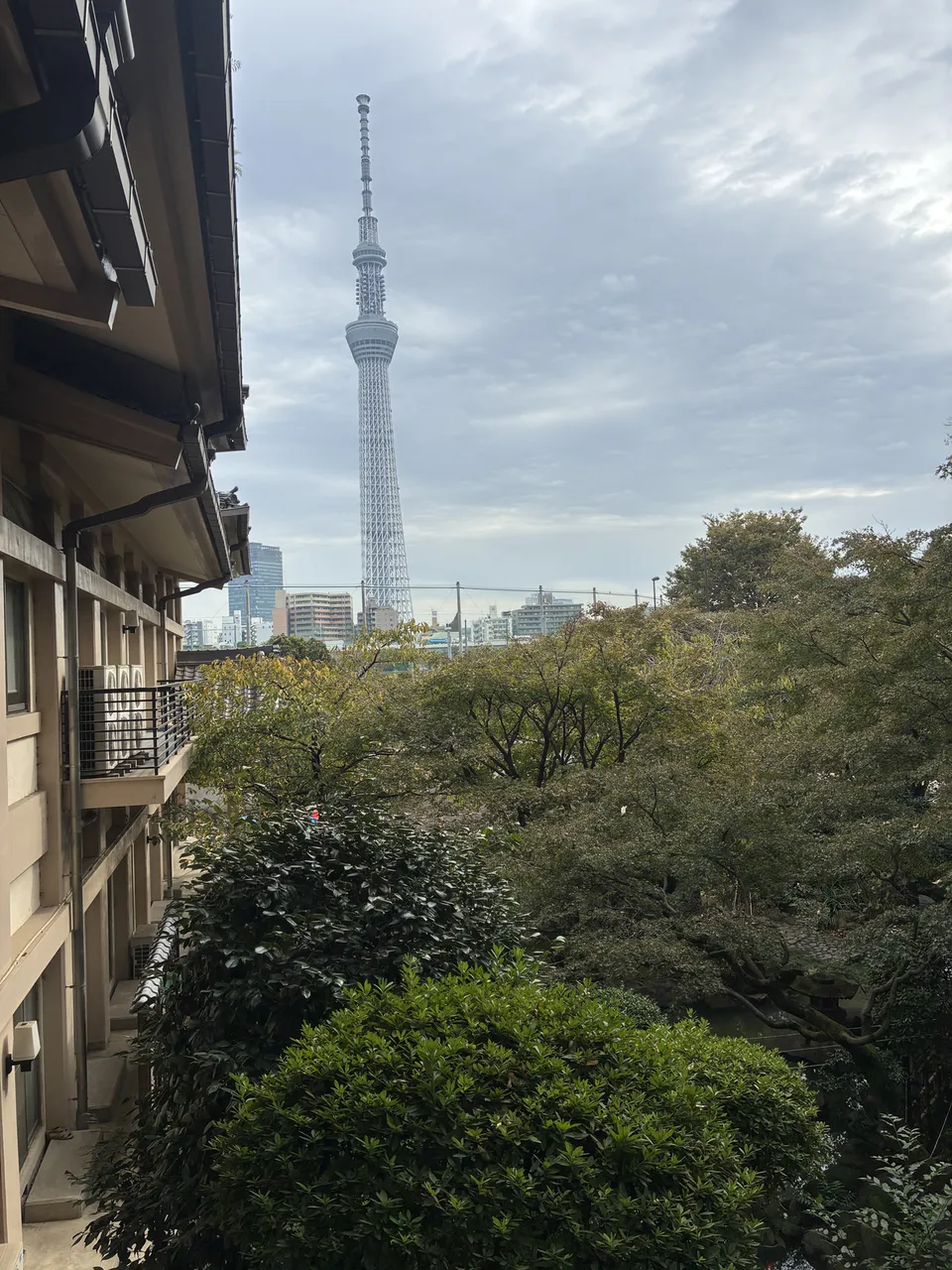
- The view: Tokyo Skytree rises above the trees to the east.
- Jizo statues: a small hall with a row of stone Jizo beside it, called Kangi Jizo and the 28 Jizo on the sign beside it (pictured below).
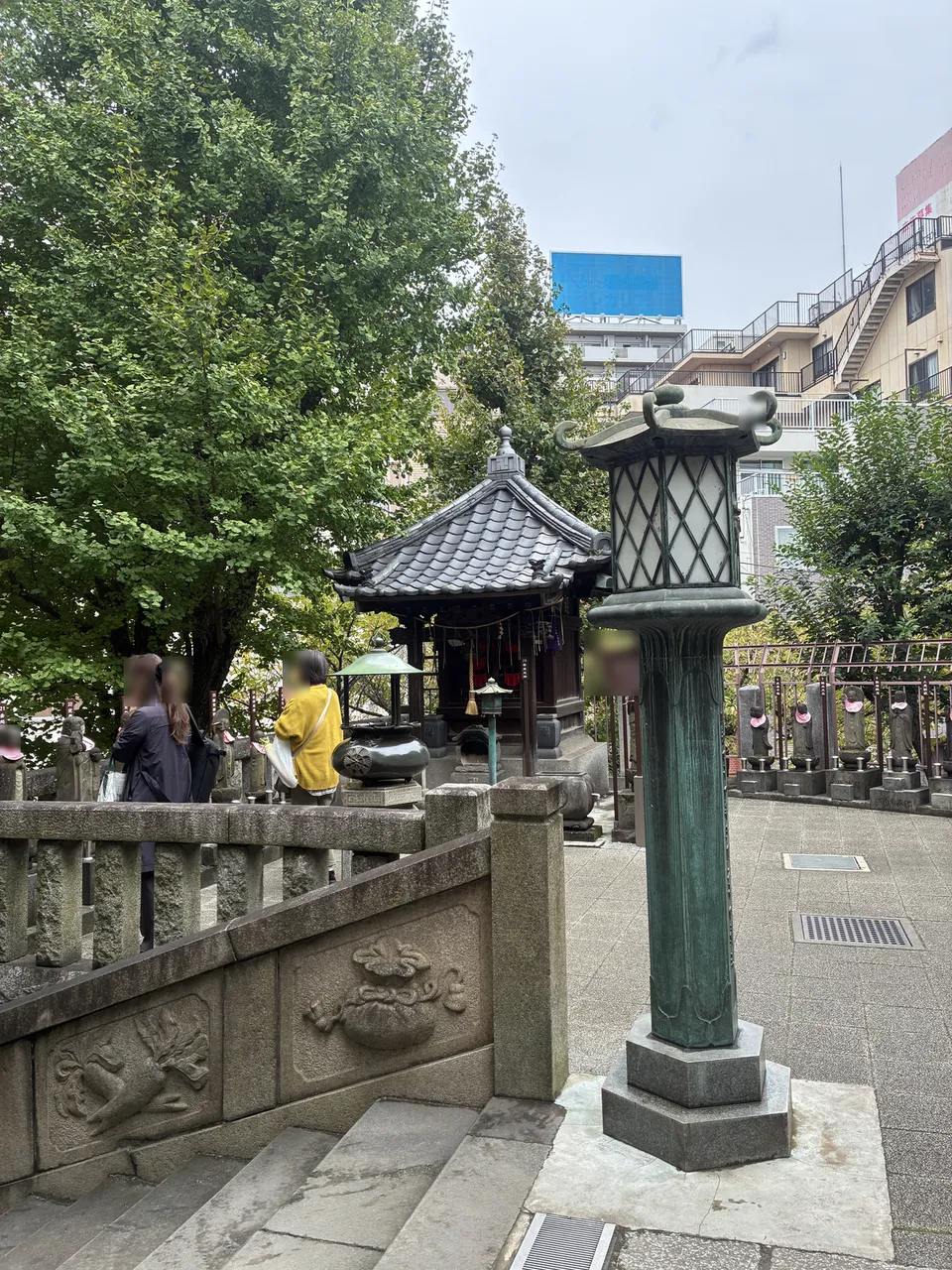 Matsuchiyama Shoden, October 30, 2026.
 Matsuchiyama Shoden, October 30, 2026.
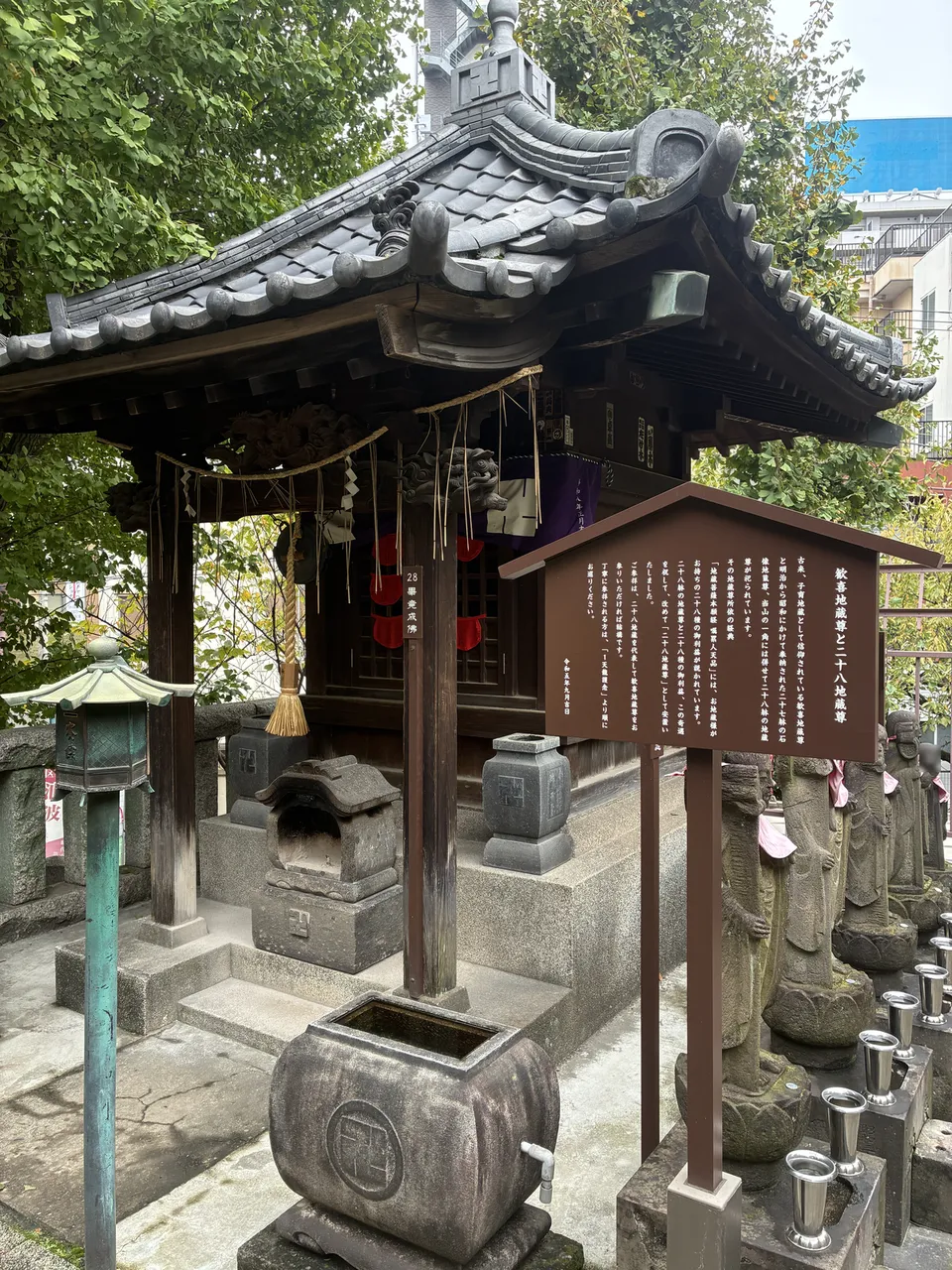 Matsuchiyama Shoden, October 30, 2026.
When should you go?
Any day between 6 a.m. and 4:30 p.m. Entry is free (GO TOKYO). The big day is the daikon festival on January 7, when many believers come (Taito City).
The park beside the temple was closed for works on October 30, 2026. A renewal opening is planned for around spring 2027.
What’s the stone at the bottom of the hill?
At the foot of the hill, on the south-east side, a red stone marks where the Heisei Nakamura-za started (平成中村座発祥の地); its location and wording are from the monument itself, photographed below. The theater, built to recreate an Edo playhouse, first opened in Sumida Park in November 2000 (Kabuki Bito, Shochiku’s kabuki site).
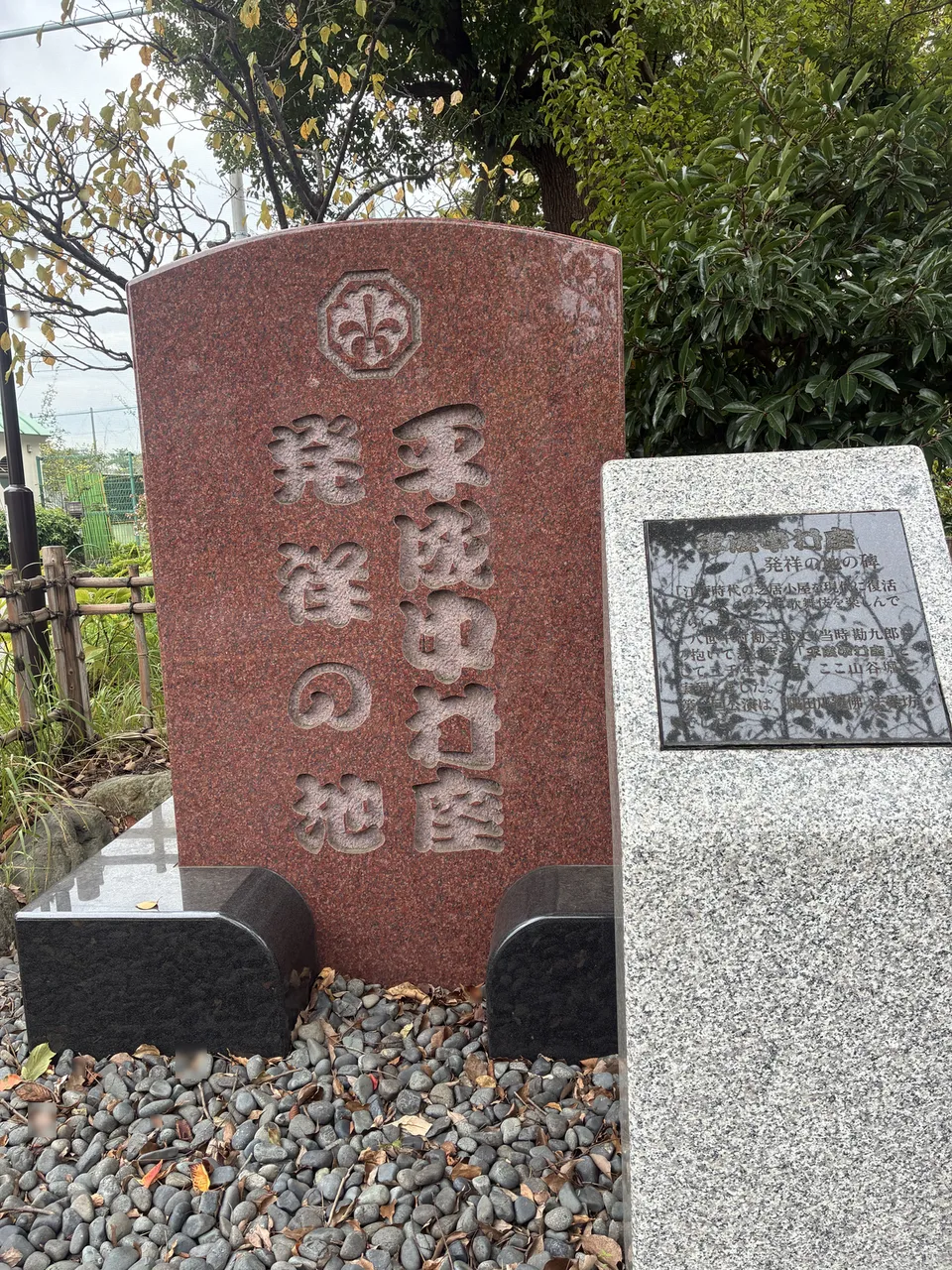 Matsuchiyama Shoden, October 30, 2026.
How do you get there?
The nicest way is on foot from Asakusa, heading north along the Sumida River; the temple’s hill is right by the river, and Imado Shrine is a few minutes further on.
GO TOKYO gives about 10 minutes on foot from Asakusa Station, Exits 7 and A5. For step-free access, Tokyo Metro’s barrier-free page confirms a street elevator only at Ginza Line Exit 1; it says nothing about Exits 7 or A5, and we have found no source for a step-free route from the station to the temple. The hall is up a flight of stone steps. GO TOKYO’s listing for the temple includes a wheelchair-accessible elevator, restrooms and a multi-purpose toilet.
What’s nearby?
- Imado Shrine, the matchmaking shrine, to the north: about 350 m on foot.
- The Saruwaka-machi kabuki sites, to the south-west: about 300–360 m on foot, depending on the marker.
- The whole Oku-Asakusa walk, which this temple is part of.
Walking distances are from OpenStreetMap foot routing (routing.openstreetmap.de).